Introduction
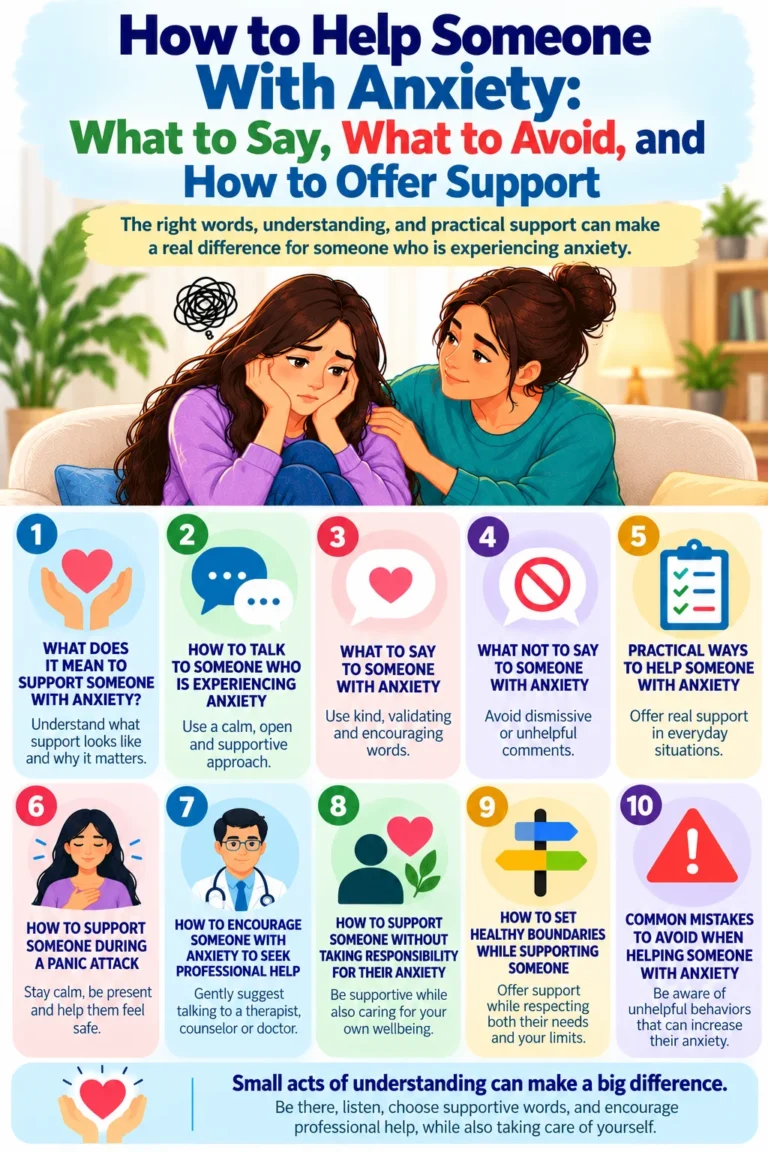
How to help someone with anxiety can feel like a difficult question when you care about them but are unsure what to say or do. You may want to reassure them, offer solutions, or help them stop worrying, yet find that your words do not seem to help. You might even worry about saying the wrong thing.
Supporting someone with anxiety does not require you to have all the answers. Often, a useful starting point is to listen without judgment, acknowledge what the person is experiencing, and ask what kind of support would be helpful. Practical assistance and a patient, respectful approach can also make it easier for someone to discuss what they need.
Anxiety affects people differently. One person may want to talk through their worries, while another may prefer quiet company or help with a specific task. What feels supportive in one situation may not be helpful in another.
It is also important to recognise the limits of your role. You can care about someone, learn about anxiety, and encourage them to seek appropriate help without becoming responsible for managing their emotions or solving every difficulty they face.
This guide explains how to approach conversations about anxiety, what to say and what to avoid, how to offer practical support, and when professional help may be worth considering. The goal is not to make you an expert in treating anxiety, but to help you respond with greater understanding, confidence, and respect.
Quick Answer: How Can You Help Someone With Anxiety?
You can help someone with anxiety by listening patiently, acknowledging their feelings without judgment, and asking what kind of support they want. Offer practical help when appropriate, respect their boundaries, and avoid dismissive comments or pressure. If anxiety interferes with daily life, gently encourage them to consider speaking with a qualified mental health professional.
KEY TAKEAWAYS
- Listen before offering solutions. Give the person space to explain what they are experiencing.
- Acknowledge their feelings. You do not have to share their fears to recognise that their distress is real to them.
- Choose supportive words. Ask open questions and avoid telling someone simply to stop worrying or calm down.
- Offer practical help. Small, specific offers may be more useful than general promises to help.
- Respect their autonomy. Ask what they need rather than assuming you know what is best.
- Encourage professional support when appropriate. Persistent anxiety that disrupts daily activities may warrant assessment by a qualified professional.
- Maintain your own boundaries. Caring for someone does not mean becoming their therapist or accepting unlimited responsibility.
- Understand that support is not a cure. You can be a helpful part of someone’s support network without guaranteeing an outcome.
1. What Does It Mean to Support Someone With Anxiety?
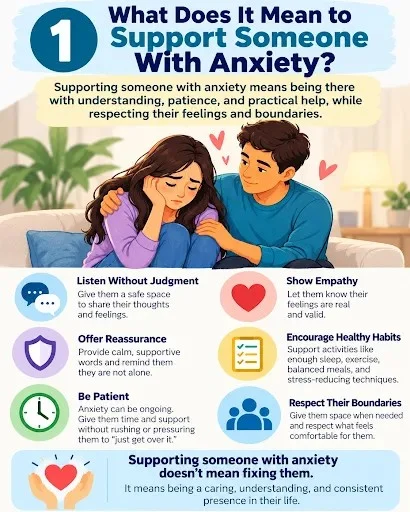
Infographic explaining how to support someone with anxiety through empathy, patient listening, reassurance, healthy habits, and respect for personal boundaries.
Supporting someone with anxiety means offering understanding, patience, and practical help while respecting the person’s feelings, choices, and individual needs. It does not mean trying to eliminate every worry, providing a diagnosis, or taking responsibility for another person’s emotional wellbeing. The goal is to help them feel heard and supported without taking away their independence. Anxiety can affect how a person responds to uncertainty, everyday responsibilities, social situations, and stressful experiences. Someone may repeatedly worry about what could go wrong, struggle with decisions, withdraw from activities, or find ordinary tasks more difficult during periods of heightened anxiety. These experiences vary from person to person, so it is important not to assume that everyone needs the same kind of support. According to the National Institute of Mental Health, friends and family can play a meaningful supportive role when someone is experiencing anxiety. Listening, communicating with compassion, learning about anxiety, and encouraging appropriate professional help when daily life is affected can all be useful ways to offer support. NIMH guidance on generalized anxiety disorder provides further information about supporting a loved one.
Understanding the Difference Between Support and Fixing
When someone you care about is distressed, it is natural to want to make the problem disappear. You might offer immediate solutions, explain why a worry seems unlikely, or encourage the person to stop thinking about it. Although these responses may come from genuine concern, they do not always address what the person needs in that moment. Support begins with recognising that you cannot control another person’s thoughts or feelings. You can listen, show concern, ask what would help, and offer practical assistance. The other person may still feel anxious afterward, and that does not necessarily mean your support has failed. For example, if a friend is worried about an upcoming work presentation, you might ask whether they would like to talk about their concerns or practise the presentation together. This offers companionship and a practical option without insisting that they stop worrying. If they prefer to handle the situation differently, respecting that choice is also part of being supportive.
Why Individual Needs Matter
There is no single response that works for everyone experiencing anxiety. One person may appreciate a conversation, while another may need some quiet time before discussing what is troubling them. Someone might welcome help organising a task but feel uncomfortable when another person makes decisions on their behalf. Rather than guessing, ask what kind of support the person would find useful. Their answer may change depending on the situation. Being willing to listen and adapt is often more helpful than following a fixed set of rules. It is also important to distinguish occasional anxiety from anxiety that persistently interferes with daily life. Anxiety can be a normal response to uncertainty or stress. When it becomes difficult to manage or starts affecting work, school, relationships, or other everyday activities, professional assessment may be appropriate. You should not attempt to determine whether someone has an anxiety disorder based on their behaviour alone.
What Support Can—and Cannot—Do
Supportive relationships can help people feel less alone and make it easier to discuss concerns or consider available resources. However, a friend or family member cannot guarantee that anxiety will disappear, and providing support is not the same as delivering mental health treatment. You do not need to become the person’s therapist or have an answer for every difficult moment. Your role can simply be to remain respectful, offer reasonable help, and encourage appropriate care when needed. It is also reasonable to maintain your own boundaries and recognise when a situation requires assistance beyond what you can provide. The central principle is simple: support the person, not just the problem. Listen to what they say, respect their preferences, and remember that meaningful support can involve being present even when you cannot change how they feel.
2. How to Help Someone With Anxiety Through Supportive Communication
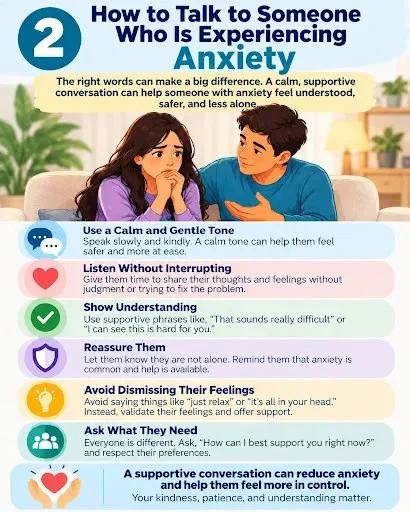
Infographic showing how to talk to someone experiencing anxiety using a calm tone, active listening, understanding, reassurance, and supportive communication.
Talking to someone who is experiencing anxiety means creating a calm, respectful space where they can share their concerns without feeling judged, rushed, or pressured to explain themselves. Start by expressing genuine concern, asking open-ended questions, and listening carefully. You do not need to solve their problems; your first priority is to understand what they are experiencing and what kind of support they would welcome.
CHOOSE THE RIGHT TIME AND APPROACH
A conversation about anxiety may be easier when the person has some privacy and does not feel rushed. Consider your relationship with them, the circumstances, and whether they seem comfortable talking. Raising your concerns in front of other people or demanding an immediate explanation may make an already difficult conversation feel more stressful. You can begin gently rather than assuming that the person is ready to discuss everything. For example, you might say, “I’ve noticed you’ve seemed worried lately. I’m here if you’d like to talk about anything.” This approach communicates concern without suggesting that you know exactly what the person is feeling. If they are not ready to talk, respect that response and let them know you are available another time.
ASK OPEN-ENDED QUESTIONS
Open-ended questions allow someone to describe their experience in their own words. They are generally more useful for starting a conversation than questions that can feel accusatory or demand a simple yes-or-no answer. You might ask:
- “How have things been feeling for you lately?”
- “What’s been on your mind recently?”
- “Would you like to tell me what’s worrying you?”
- “What would feel most helpful from me right now?” Ask one question at a time and give the person time to respond. They may need a moment to organise their thoughts, or they may find it difficult to explain what is happening. Avoid turning the conversation into an interview by asking question after question. If they say they do not want to talk, you can acknowledge their choice without withdrawing your support. A simple response such as “That’s okay. I’m here if you want to talk later” leaves the door open without applying pressure.
LISTEN WITHOUT JUDGMENT
When someone shares their worries, try to understand their perspective before offering advice. You may believe their fear is unlikely to happen, but immediately explaining why they should not worry can leave them feeling misunderstood. Listening does not require you to agree with every fear; it means taking the person’s experience seriously. Give them your attention, avoid interrupting, and allow them to finish their thoughts. You can reflect what you have heard to check that you understand. For example, “It sounds like the uncertainty about what might happen is making this especially difficult.” This kind of response shows that you are trying to understand rather than dismiss the concern. If you are unsure what the person means, ask a gentle follow-up question instead of making assumptions. The National Institutes of Health’s MedlinePlus Magazine guide to helping someone with anxiety recommends listening, asking questions, recognising the person’s feelings, and considering how best to approach the conversation.
ACKNOWLEDGE THEIR FEELINGS WITHOUT ASSUMING YOU KNOW THE ANSWERS
You do not have to experience the same anxiety to recognise that someone is finding a situation difficult. Acknowledging their feelings can help communicate that they do not need to defend or justify every emotion before receiving your attention. For example, you might say, “That sounds like a lot to deal with,” or “I can see this has been weighing on you.” Avoid claiming that you know exactly how they feel unless you genuinely share a comparable experience. Even then, remember that each person’s circumstances are different. Keep the conversation centred on their experience rather than shifting it immediately to your own story. You can also ask whether they want advice or simply someone to listen. This small question helps prevent a well-intentioned conversation from becoming a stream of unwanted solutions.
PAY ATTENTION TO THEIR COMFORT AND BOUNDARIES
Not everyone communicates distress in the same way. Some people speak openly, while others become quiet, change the subject, or need time before discussing personal concerns. These behaviours do not, by themselves, establish that someone has an anxiety disorder or reveal exactly what they are feeling. Notice how the person responds, but do not interpret every pause or change in behaviour as a sign that something is wrong. If they appear uncomfortable, give them space and ask whether they would prefer to continue later. Respecting boundaries also means not sharing their personal information with others without permission, except when a serious safety concern requires appropriate help. If you believe the person may be in immediate danger, prioritise their safety and seek suitable assistance rather than relying on an ordinary conversation alone.
FOLLOW UP WITHOUT PRESSURE
A supportive conversation does not have to resolve everything in one sitting. Sometimes, a later message or a brief check-in can show that your concern was genuine and that you have not forgotten what the person shared. You might ask, “How have you been feeling since we last talked?” or “Would you like to catch up today?” Avoid repeatedly checking whether the person is still anxious or expecting them to report improvement. The purpose of following up is to offer continued connection, not to monitor their emotions or demand progress. If their anxiety appears to be interfering with everyday activities, you can eventually discuss whether professional support might be helpful. That conversation deserves its own careful approach, which we will cover in a later section. The key takeaway: A helpful conversation is not measured by whether you make someone’s anxiety disappear. It is measured by whether you approach them with respect, listen to what they are telling you, and leave them feeling free to decide what they want to share and what support they need.
3. What to Say to Someone With Anxiety
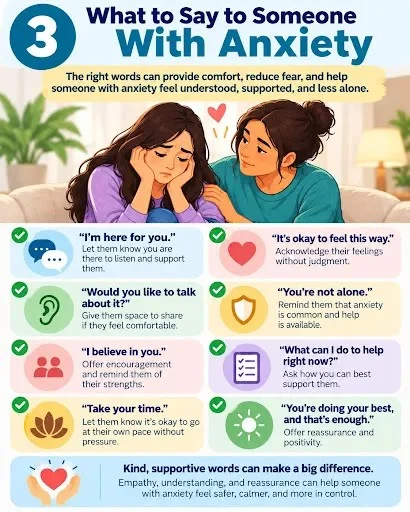
Infographic listing supportive phrases to say to someone with anxiety, including validating feelings, offering reassurance, and asking how to help.
Knowing what to say to someone with anxiety can help you communicate care without dismissing their worries or putting pressure on them to feel better. Helpful words acknowledge the person’s experience, offer reassurance without making promises, and invite them to share what they need. The aim is not to eliminate anxiety through conversation, but to help the person feel heard, respected, and supported.
ACKNOWLEDGE WHAT THE PERSON IS EXPERIENCING
When someone shares their worries, they may be looking for understanding rather than an immediate solution. Acknowledging their feelings shows that you are taking their experience seriously, even if you see the situation differently. You could say:
- “I can see that this is really difficult for you.”
- “It sounds like you’ve been carrying a lot of worry.”
- “Thank you for telling me how you’re feeling.”
- “You don’t have to explain everything perfectly. I’m listening.” These phrases communicate interest without judging the person or assuming you know exactly what is happening. You do not need to agree with every fear they describe to recognise that their distress matters. For example, if a friend is worried about an upcoming examination, avoid immediately telling them that there is nothing to worry about. Instead, acknowledge the pressure they feel and give them an opportunity to explain what concerns them most.
LET THEM KNOW YOU ARE THERE FOR THEM
A person experiencing anxiety may not know how to ask for support. A simple statement of availability can make it easier to begin a conversation without requiring them to disclose more than they want to. Consider saying:
- “I’m here if you want to talk.”
- “You don’t have to work through this conversation alone.”
- “Would you like some company?”
- “We can talk about this whenever you’re ready.” Keep your words genuine and follow through on reasonable offers when you can. You do not need to promise that you will always be available or that you can solve every problem. Honest, dependable support is more useful than a promise you cannot realistically keep. If the person does not want to talk, respect their choice. You can let them know that your offer remains open without repeatedly asking them to explain themselves.
ASK WHAT KIND OF SUPPORT WOULD HELP
People experiencing anxiety do not always want advice. Some may appreciate help thinking through a concern, while others may prefer someone to listen or spend time with them. Asking what they need allows them to participate in deciding what support feels appropriate. Try these questions:
- “Would you like me to listen, or would you like help thinking through this?”
- “Is there anything I could do that would make this easier?”
- “Would it help to work through the next step together?”
- “Would you prefer some company or a little time to yourself?” If they ask for practical help, keep your offer specific and manageable. For example, you might offer to help organise a task, accompany them to an appointment if they want you there, or sit with them while they prepare for a challenging responsibility. Remember that asking is important. Do not assume that your preferred solution is necessarily what the other person wants.
OFFER REALISTIC ENCOURAGEMENT WITHOUT MAKING PROMISES
When someone is anxious, it can be tempting to guarantee that everything will turn out well. Although this may come from kindness, no one can predict every outcome. More helpful encouragement recognises the uncertainty while reminding the person that they can consider their options and seek support. You might say:
- “We don’t know exactly what will happen, but we can think through your options.”
- “You don’t have to figure everything out at once.”
- “Let’s focus on what feels manageable right now.”
- “You can take this one step at a time.” These statements avoid promising a particular result. They also shift the conversation towards manageable choices without suggesting that the person should simply overcome their feelings through willpower. For example, if a colleague is anxious about giving a presentation, you could offer to listen while they practise or help them organise their main points. This provides practical encouragement without guaranteeing that the presentation will go perfectly.
RECOGNISE EFFORT WITHOUT DEMANDING PROGRESS
Anxiety can make some everyday activities feel difficult. When someone makes an effort to face a challenging situation, a thoughtful acknowledgement may help them feel recognised rather than judged. You could say:
- “I appreciate how much effort this is taking.”
- “I’m glad you told me what you’ve been dealing with.”
- “It sounds like you worked hard to manage that situation.”
- “What do you think helped you get through it?” Focus on the person’s effort rather than measuring their progress against someone else’s expectations. Avoid implying that they should improve quickly or that experiencing anxiety again means they have failed. Progress is not always straightforward, and your role is not to assess or grade the person’s recovery. You can recognise their efforts while allowing them to decide what progress means in their circumstances.
WHEN SOMEONE DOES NOT KNOW WHAT TO SAY
Sometimes, a person experiencing anxiety may struggle to explain their concerns or may not know what kind of support they want. You do not have to fill every silence with advice. A calm, patient response can keep the conversation open without forcing an answer. You might say, “It’s okay if you don’t know how to explain it yet. We don’t have to work everything out right now.” If the person seems overwhelmed, ask whether they would prefer to pause, sit quietly, or continue talking later. Give them room to choose rather than assuming that silence means they do not want your support. The National Institute of Mental Health recommends communicating with compassion, acknowledging a loved one’s experience, and learning about appropriate support options. Its guidance on generalized anxiety disorder also explains when anxiety affecting everyday life may warrant professional help. The key takeaway: You do not need perfect words to support someone with anxiety. Listening, acknowledging their feelings, offering realistic encouragement, and asking what would help can make your response more respectful and useful. What matters most is communicating care without dismissing their experience or promising an outcome you cannot guarantee.
4. What Not to Say to Someone With Anxiety
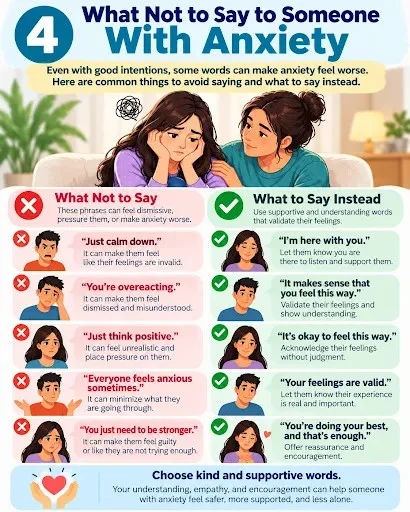
Infographic comparing dismissive comments to supportive alternatives when talking to someone with anxiety, emphasizing empathy and emotional validation.
Some comments intended to reassure a person with anxiety can leave them feeling dismissed, embarrassed, or misunderstood. Telling someone to stop worrying, comparing their difficulties with other people’s problems, or demanding that they calm down may close the conversation rather than help. Understanding why these responses can hurt—and choosing a more thoughtful alternative—can make difficult conversations more supportive.
AVOID TELLING SOMEONE TO JUST CALM DOWN
When someone appears visibly anxious, telling them to calm down may seem like the quickest way to help. However, the person may already be trying to manage their feelings and may not know how to make the distress ease. The instruction can sound as though their anxiety is a choice they should be able to switch off. Imagine that a friend is worried about attending a social gathering. They have spent the day thinking about what might happen and are now struggling to decide whether to go. Hearing “Just calm down; it’s not a big deal” may make them feel that their difficulty is being minimised. A more constructive response would acknowledge the situation without demanding an immediate change in emotion. You could ask whether they want to talk about what is making the gathering difficult or consider their options together. The aim is not to find a perfect sentence. It is to avoid adding pressure when someone is already struggling.
DO NOT DISMISS THEIR WORRIES AS SILLY OR IRRATIONAL
You may find it difficult to understand why a particular situation causes someone so much anxiety. What seems straightforward to you may feel uncertain or threatening to them. Calling their concerns silly, ridiculous, or irrational can make them reluctant to share what they are experiencing. For example, a person may worry intensely about making a mistake during a work presentation. Responding with “That’s a ridiculous thing to worry about” shifts attention away from their concern and towards defending themselves. You can acknowledge their distress without agreeing that the feared outcome is likely. Saying something like “I can see this is weighing on you. What part feels most difficult?” gives the person an opportunity to explain their concern. This distinction matters: recognising someone’s feelings does not mean confirming every prediction they make about the future. It means treating them respectfully while leaving room to consider the situation realistically.
AVOID COMPARING THEIR EXPERIENCE WITH OTHER PEOPLE’S PROBLEMS
Comments such as “Other people have it much worse” or “You have nothing to complain about” rarely help someone explain what they are going through. Comparing difficulties can introduce shame without addressing the person’s actual concern. A friend may have a supportive family, a steady job, and many opportunities yet still experience significant anxiety. The presence of positive circumstances does not establish how someone feels or whether they need support. Instead of comparing their life with someone else’s, focus on what they are finding difficult. You do not need to decide whether their concern is serious enough to deserve attention before listening. If you have a different perspective, you can share it respectfully after understanding their experience and asking whether they want your input.
DO NOT PRESSURE THEM TO EXPLAIN EVERYTHING
Questions can show interest, but repeated questioning can feel intrusive when someone is not ready to talk. Asking “What’s wrong with you?” or insisting that they explain their feelings immediately may make the person feel cornered. Some people need time to understand what they are experiencing before they can put it into words. Others may prefer to keep certain details private. Neither situation automatically means that they do not trust you. Give them room to decide how much to share. If they say they are not ready to talk, respect that boundary and leave the possibility of a later conversation open. Support should make it easier for someone to speak when they choose to—not create an obligation to disclose personal information.
AVOID PROMISING THAT EVERYTHING WILL BE FINE
When someone is anxious about an uncertain outcome, you might want to say, “Everything will definitely work out.” The intention is kind, but you cannot know for certain what will happen. If events turn out differently, the person may feel that their concerns were not taken seriously. A more honest approach recognises uncertainty without assuming the worst. For example, you could discuss what is known, what remains uncertain, and whether there is a practical step the person wants to take. This approach offers companionship without creating false certainty. It also avoids turning reassurance into a promise that you cannot keep.
DO NOT USE BLAME OR SHAME TO FORCE CHANGE
Statements such as “You’re making this difficult for everyone” or “You need to get over it” can turn a conversation about anxiety into a judgment about the person’s character. Anxiety can affect everyday decisions, participation, and communication. That does not mean other people must ignore their own needs or accept every request. However, setting a boundary is different from shaming someone for experiencing distress. For instance, if a friend repeatedly cancels plans, you can explain that you miss spending time together and ask whether there is a way to make future plans more manageable. You can also be honest if repeated changes affect your own commitments. Clear, respectful communication allows both people to express their needs without treating anxiety as a personal failing.
REMEMBER THAT SUPPORT DOES NOT MEAN AGREEING WITH EVERYTHING
Being supportive does not require you to confirm every fear, provide endless reassurance, or reorganise your life around avoiding every situation that makes another person anxious. Sometimes, repeated reassurance or extensive avoidance can become part of a pattern that keeps anxiety difficult to manage. The circumstances matter, and a qualified professional can help the person understand these patterns when they are causing problems. You can acknowledge the feeling while remaining honest about what you know. You can offer help without taking control. You can also recognise when a problem needs support beyond what a friend or family member can provide. The goal is to balance compassion with respect for both people’s needs, rather than choosing between dismissing anxiety and agreeing with every anxious thought. The U.S. guidance from Johns Hopkins Medicine on helping someone with anxiety similarly emphasises validating the person’s experience, expressing concern, and avoiding dismissive responses or forcing confrontation. The key takeaway: Avoid words that shame, minimise, pressure, or promise what you cannot know. You do not have to agree with every fear to respond with compassion. Respectful honesty, patience, and a willingness to understand the person’s perspective provide a better foundation for support.
5. Practical Ways to Help Someone With Anxiety
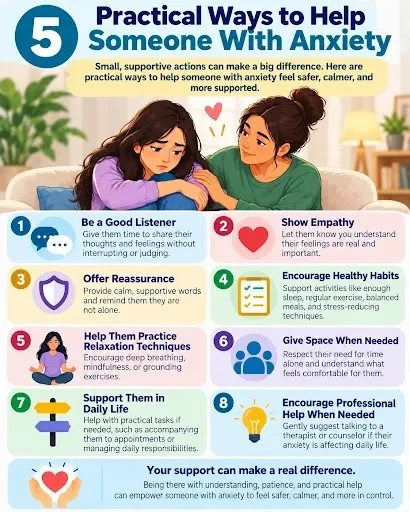
Infographic outlining practical ways to help someone with anxiety through listening, reassurance, healthy habits, relaxation techniques, daily assistance, and professional support.
Practical support for someone with anxiety means helping with everyday challenges in ways that respect their preferences and independence. You might offer help with a specific task, spend time together, make plans that feel manageable, or help them explore appropriate resources. The most useful support is collaborative: ask what would help rather than assuming you know what the person needs.
OFFER HELP WITH ONE SPECIFIC TASK
When anxiety makes an ordinary responsibility feel difficult, a broad offer such as “Let me know if you need anything” may be hard to act on. A specific, manageable offer gives the person something concrete to consider without making decisions for them. For example, if a friend feels overwhelmed by several upcoming responsibilities, you could offer to help organise a list of tasks or work alongside them while they begin one. If a family member is struggling to attend an appointment, you could ask whether they would like company or help arranging transportation. Keep the offer proportionate to what you can realistically provide. The aim is to make a task more manageable, not to take over every responsibility or suggest that the person cannot handle things themselves.
KEEP EVERYDAY CONNECTIONS GOING
Anxiety can sometimes lead people to withdraw from activities or social contact. Continuing to include someone in ordinary plans can help them feel that they remain part of your life, even when they are having a difficult period. You might invite a friend for a short walk, suggest watching a film together, or offer to share a meal. Choose activities that suit your relationship and ask what feels comfortable to them. If they decline, try not to interpret that as rejection or stop inviting them altogether. You can leave the invitation open without repeatedly pressuring them to participate. Equally, avoid assuming that every activity must be changed around their anxiety. The person should have a say in what feels manageable.
MAKE PLANS FLEXIBLE WITHOUT REINFORCING AVOIDANCE
Sometimes a small adjustment can make an activity easier to approach. Someone who feels anxious about a busy gathering might prefer to meet one friend first, arrive with a trusted person, or agree on a reasonable plan for leaving if necessary. Ask what would make the situation more manageable rather than deciding on their behalf. A flexible arrangement can offer a starting point while allowing the person to participate in choices about their own life. However, repeatedly helping someone avoid every situation that causes anxiety may not be helpful in the long term. When avoidance begins to restrict everyday activities, a qualified mental health professional can help the person explore suitable ways to address it. Do not force exposure to feared situations or turn informal support into an unsupervised treatment plan.
HELP THEM FIND TRUSTWORTHY INFORMATION
If someone is curious about anxiety or wants to understand their options, you can offer to look for reliable information together. The National Institute of Mental Health provides accessible information about anxiety disorders, common symptoms, and available treatments. You can also help them prepare questions for a healthcare appointment or locate qualified mental health professionals if they would like assistance. Let the person decide whether they want this help and which options they wish to explore. Avoid diagnosing them from an online checklist or encouraging them to rely on social media claims about treatment. Educational information can help people ask informed questions, but a qualified professional is needed to assess an individual’s symptoms and circumstances.
SUPPORT SMALL, SELF-CHOSEN STEPS
When someone feels overwhelmed, a large task can seem difficult to approach. If they want help, you can work with them to identify a smaller first step that feels realistic. For example, a person who has been putting off an important phone call might decide to write down what they want to ask before making it. Someone who feels overwhelmed by a busy week might choose one task to organise first. Let the person choose the step and the pace. Avoid treating these small actions as a test of courage or expecting them to follow your plan. What feels manageable will vary according to the individual and the situation. Notice effort without demanding constant progress. If the person finds a step difficult, that does not mean they have failed or that your support has been wasted.
CHECK IN AND FOLLOW THROUGH
Support is often more useful when it continues beyond a single conversation. A brief message a few days later, an invitation to spend time together, or following through on an offer can show that your concern is genuine. You might ask how they have been doing or whether the help you offered was useful. Keep the conversation open without expecting them to provide regular updates about their anxiety. If you offer to accompany someone to an appointment, for example, make sure you can honour that commitment. If your availability changes, communicate honestly rather than leaving them uncertain. Consistency does not mean being available at every moment. It means offering support that is dependable within your actual circumstances and respecting both people’s needs.
KNOW WHEN PRACTICAL SUPPORT IS NOT ENOUGH
Helping with daily tasks and maintaining social connections can be valuable, but these actions are not a substitute for professional assessment or treatment when anxiety is persistent or significantly affects daily life. If the person is struggling with work, education, relationships, sleep, or ordinary responsibilities, you can gently suggest that they consider speaking with a qualified healthcare or mental health professional. If they want help taking that step, you might offer to research options together or help prepare questions for an appointment. The National Institute of Mental Health explains that treatment for anxiety disorders may include psychotherapy, medication, or both, depending on the individual’s needs and clinical assessment. Decisions about treatment belong with the person and their qualified healthcare provider. You can contribute to a supportive environment without becoming responsible for their recovery. Your role is to offer reasonable help, respect their choices, and recognise when additional support may be appropriate. The key takeaway: Useful support is often practical, specific, and collaborative. Ask before helping, offer manageable options, maintain ordinary human connection, and respect the person’s independence. You can make difficult days easier without taking over their life or assuming responsibility for treating their anxiety.
6. How to Support Someone During a Panic Attack
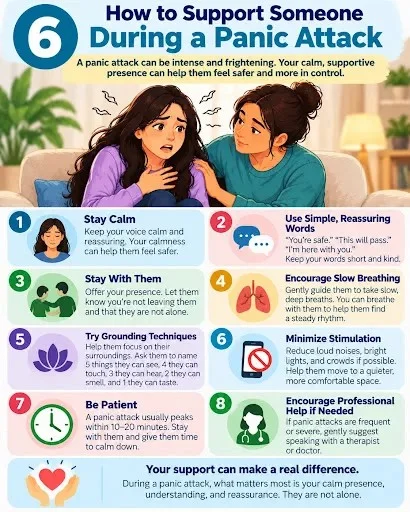
Infographic explaining how to support someone during a panic attack with calm reassurance, grounding techniques, slow breathing, patience, and a quiet environment.
Supporting someone during a panic attack means staying calm, helping them feel less alone, and responding to what they say they need. Speak gently, reduce unnecessary pressure, and offer simple choices rather than taking control. Because panic symptoms can resemble medical emergencies, never assume that sudden chest pain, breathing difficulties, or other unfamiliar symptoms are caused by anxiety.
STAY CALM AND SPEAK GENTLY
A panic attack can involve an intense wave of fear and physical discomfort. The person may experience a racing heartbeat, trembling, dizziness, sweating, nausea, or a feeling that something terrible is about to happen. These experiences can be frightening, especially if the person does not understand what is happening. If someone appears distressed, approach calmly and introduce yourself if necessary. Use a steady voice and short, clear sentences. Avoid crowding them, raising your voice, or asking several questions at once. For example, you could say, “I’m here with you. Would you like me to stay nearby?” You do not need to give a long explanation or persuade the person that their feelings are unreasonable. Your immediate role is to offer calm, respectful support while remaining alert to signs that medical assistance may be needed.
ASK WHAT WOULD HELP AND RESPECT THEIR SPACE
People respond differently during intense anxiety. One person may appreciate having someone nearby, while another may prefer more physical space or less conversation. Do not assume that touching, hugging, holding someone’s hand, or moving them somewhere else will automatically help. Ask a simple question, such as, “Would you like me to sit with you, or would you prefer some space?” If they request space and appear safe, respect their preference while remaining available. If they want company, stay with them if you can do so safely. Avoid surrounding them with several concerned people, as this may add to the pressure they are already experiencing. If the person has previously told you what helps during a panic attack, follow those preferences when appropriate. If you do not know, ask rather than guessing.
HELP REDUCE UNNECESSARY PRESSURE
A busy, noisy, or crowded environment may make it harder for someone to communicate what they need. If it is safe and the person agrees, you might offer to move to a quieter nearby place or reduce distractions around them. Do not force them to walk, leave a location, or explain their symptoms to other people. Give them time to respond and allow them to make choices wherever possible. You can also help by handling a simple practical concern, such as asking a bystander to give them privacy or helping contact someone they trust. Keep the person’s dignity in mind and avoid drawing unnecessary attention to what is happening. If they seem confused, collapse, become unresponsive, or have symptoms suggesting a medical emergency, prioritise urgent medical assistance instead of treating the situation as ordinary anxiety.
OFFER SIMPLE, OPTIONAL GROUNDING OR BREATHING SUPPORT
Some people find it helpful to pay attention to their surroundings or breathe slowly and comfortably during a panic attack. Others may find instructions difficult to follow when they feel overwhelmed. If the person is receptive, you could ask whether they would like to focus on something nearby, such as the feel of their feet against the floor or a familiar object in their hand. You might also invite them to breathe gently at a comfortable pace without insisting on a particular pattern. Do not demand that they take deep breaths, hold their breath, or follow a timed exercise. Avoid using a paper bag to manage breathing difficulties. If breathing problems are severe, new, or unusual, seek urgent medical assessment rather than assuming they are caused by panic. These approaches are optional forms of support, not guaranteed ways to stop an attack. If the person does not want to try them, respect that choice.
KNOW WHEN TO SEEK URGENT MEDICAL HELP
Panic attacks can cause physical symptoms that resemble those of other medical conditions. Chest discomfort, a racing heartbeat, dizziness, and difficulty breathing should not automatically be attributed to anxiety, particularly when the symptoms are new, severe, or different from what the person has experienced before. Call 911 in the United States if the person appears to be experiencing a life-threatening emergency, such as severe difficulty breathing, collapse, unresponsiveness, or concerning chest pain. Follow the emergency dispatcher’s instructions. Do not delay seeking help because you suspect the person may be having a panic attack. If the person has a previously assessed pattern of panic attacks, that history may help guide their response, but it does not rule out a separate medical problem. When you are uncertain about the cause of serious symptoms, seek appropriate medical assistance. The National Institute of Mental Health explains that panic attacks can include chest pain, shortness of breath, dizziness, and a racing heart. Its guidance also notes that healthcare professionals may need to assess physical causes when evaluating panic symptoms. Read the NIMH guide to panic disorder for further information.
STAY SUPPORTIVE AFTER THE IMMEDIATE DISTRESS EASES
Once the person appears more settled, avoid immediately questioning them about what happened or telling them what they should do differently next time. They may feel tired, embarrassed, unsettled, or simply relieved that the experience has eased. You might ask, “Would you like some water or a little time to rest?” Offer practical help without assuming they want to discuss the episode. If panic-like episodes recur or begin interfering with everyday activities, encourage the person to consider speaking with a qualified healthcare or mental health professional. They can help assess the symptoms and discuss appropriate support or treatment options. You do not need to investigate the cause or diagnose the person yourself. Listening, respecting their preferences, and helping them access appropriate care when needed are meaningful ways to support them. The key takeaway: During a suspected panic attack, stay calm, offer choices, respect personal space, and avoid forcing techniques or physical contact. Take unfamiliar or severe physical symptoms seriously. Compassionate support can help someone feel less alone, but medical assessment takes priority when an emergency may be occurring.
7. How to Encourage Someone With Anxiety to Seek Professional Help
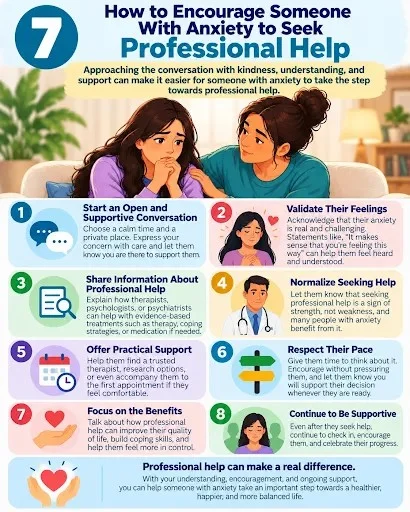
Infographic showing how to encourage someone with anxiety to seek professional help through compassionate conversations, treatment information, practical assistance, and patient encouragement.
Encouraging someone with anxiety to seek professional help means expressing concern about how they are coping, explaining why additional support may be useful, and respecting their right to make decisions about their care. When anxiety persistently affects everyday activities, a qualified mental health professional can assess the person’s needs and discuss appropriate options. Your role is to make seeking help feel possible, not to diagnose or pressure them.
RECOGNISE WHEN ADDITIONAL SUPPORT MAY BE USEFUL
Occasional anxiety does not automatically mean someone needs professional treatment. However, if worry or fear repeatedly interferes with work, school, relationships, sleep, or ordinary responsibilities, it may be worth discussing professional support. For example, a friend might repeatedly miss activities they value because of anxiety, struggle to complete everyday tasks, or feel unable to manage persistent worries. These experiences do not establish a diagnosis, but they can provide a reason to ask how the person is coping and whether they would like help exploring their options. Avoid deciding that someone has an anxiety disorder based on what you observe. Instead, focus on the difficulties they have described and the impact those difficulties seem to be having on their life. The National Institute of Mental Health advises people to consider professional help when anxiety begins causing problems in everyday life. A healthcare professional can help assess the situation and determine what support may be appropriate.
RAISE YOUR CONCERNS WITHOUT MAKING THE PERSON FEEL JUDGED
Talking about professional help can feel personal. Someone may worry about being misunderstood, labelled, or pressured into treatment. A conversation is more likely to remain constructive when you describe your concern without criticising their behaviour or suggesting that something is wrong with them as a person. Choose a suitable time to talk privately. Explain what you have noticed in specific, respectful terms rather than making broad statements about their mental health. For example, you might say, “You’ve mentioned how difficult things have felt lately, and I’ve noticed it’s been affecting activities that matter to you. Would you be open to exploring some support?” This approach leaves room for the person to explain their perspective. It also makes clear that your concern is about their wellbeing, not about forcing them to meet your expectations.
UNDERSTAND WHY SOMEONE MAY HESITATE
A person may be reluctant to seek professional help for many reasons. They might be unsure whether their difficulties are serious enough, concerned about cost, uncertain about confidentiality, or worried about what treatment involves. Previous negative experiences with healthcare can also influence their willingness to try again. Rather than assuming they are being unreasonable, ask what concerns them most. Listen to their answer before suggesting possible solutions. If cost is the main obstacle, for example, you could offer to help them explore available insurance benefits or lower-cost services if they want assistance. If they are unsure what happens in therapy, you could help them find reliable information about what an initial appointment may involve. Not every concern can be resolved immediately. The person may need time to consider their options, and respecting that process is part of offering meaningful support.
OFFER PRACTICAL HELP WITH FINDING CARE
Finding a suitable professional can involve several decisions, including cost, availability, qualifications, location, and whether the person prefers in-person or virtual appointments. The process may feel difficult when someone is already dealing with persistent worry. If they welcome your help, you could offer to:
- Find reliable information about qualified mental health professionals.
- Help them check whether their health insurance covers mental health services.
- Explore employee assistance or community-based services where available.
- Help them prepare questions for a first appointment.
- Accompany them to an appointment if they request your company and the provider permits it. In the United States, the Substance Abuse and Mental Health Services Administration (SAMHSA) provides a treatment locator at FindTreatment.gov. A primary care provider can also help assess concerns and discuss referrals to appropriate mental health professionals. These are options, not requirements. Let the person decide what assistance they want and which professional or service they feel comfortable approaching.
EXPLAIN THAT SEEKING HELP DOES NOT MEAN FAILURE
Some people hesitate because they believe they should be able to manage anxiety on their own. Others worry that asking for help means they are weak or incapable. You can gently challenge these assumptions without minimising their concerns. Seeking professional support is one way to understand persistent difficulties and explore available options. It does not mean someone has failed to cope, and it does not require them to have a particular diagnosis before discussing their concerns with a healthcare professional. Avoid promising that therapy will solve every problem or that a particular treatment will work for everyone. Treatment decisions depend on the person’s circumstances, preferences, and professional assessment. The purpose of an initial conversation with a provider is to explore those needs, not to commit to every recommendation in advance.
RESPECT THEIR DECISION WHILE KEEPING THE DOOR OPEN
If someone declines your suggestion, try not to turn the conversation into an argument. Repeated pressure, threats, or comparisons with other people may make them less comfortable discussing their concerns with you. You can acknowledge their decision while making it clear that support remains available. If they are not ready to explore treatment now, they may be more willing to revisit the idea later. You should also recognise your own limits. You can express concern, provide reliable information, and offer practical assistance, but you cannot make another person engage in treatment simply because you believe it would help. If their anxiety is affecting your relationship or shared responsibilities, it is reasonable to discuss those effects respectfully. Supporting someone does not require you to ignore your own wellbeing or become responsible for their care.
WHEN THE SITUATION REQUIRES URGENT HELP
Most conversations about seeking professional support are not emergencies. However, if someone appears to be in immediate danger, is unable to remain safe, or needs urgent medical attention, ordinary encouragement to book an appointment may not be enough. In the United States, call 911 for a life-threatening emergency. If someone is experiencing a mental health crisis, you can call or text 988 to contact the 988 Suicide & Crisis Lifeline for support and guidance. Do not promise to keep a serious safety concern secret; seek appropriate help when necessary. Respond calmly and take the person’s safety seriously. Do not assume that every episode of intense anxiety is a crisis, but do not dismiss clear signs of immediate danger. The key takeaway: You can encourage professional help by expressing concern respectfully, listening to the person’s reservations, and offering practical assistance with their permission. Professional care is an option to explore when anxiety disrupts daily life, not a decision you can make on someone else’s behalf.
8. How to Support Someone Without Taking Responsibility for Their Anxiety
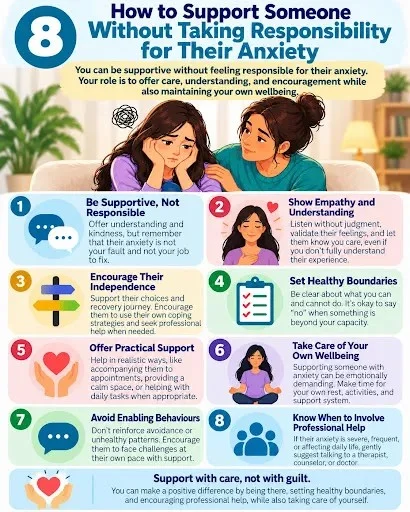
Infographic explaining how to support someone with anxiety while encouraging independence, maintaining personal boundaries, protecting your wellbeing, and recognizing when professional help may be needed.
Supporting someone with anxiety means offering care, understanding, and reasonable assistance while recognising that you cannot control another person’s feelings or recovery. You can listen, help with practical tasks, and encourage appropriate support, but you do not have to solve every problem or prevent every difficult emotion. Healthy support respects both the person’s independence and your own wellbeing.
UNDERSTAND WHAT IS YOUR RESPONSIBILITY AND WHAT IS NOT
When someone you care about is struggling, it is natural to want to protect them from distress. Over time, however, you may begin to feel responsible for preventing every worry, avoiding anything that might upset them, or finding an answer whenever they feel anxious. For example, you might repeatedly cancel your own plans because a friend is worried about being alone, or spend hours trying to guarantee that nothing will go wrong for a family member. Although these actions may come from concern, they can leave you feeling exhausted and may make it difficult to maintain a balanced relationship. You are responsible for how you treat the person, the commitments you make, and the boundaries you communicate. You are not responsible for controlling every emotion they experience or ensuring that their anxiety disappears. Recognising this difference does not mean caring less. It means offering support that is realistic and sustainable rather than trying to manage something outside your control.
OFFER HELP WITHOUT TAKING OVER
Practical help can be valuable, particularly when someone feels overwhelmed. The important distinction is whether you are assisting them with something they want help with or automatically taking responsibility for decisions and tasks they could make themselves. Suppose a family member feels anxious about making an appointment. You could offer to help them find contact information or sit with them while they make the call, if they want that support. Automatically making every appointment, speaking on their behalf, or managing all their responsibilities may leave little room for them to express their own preferences. Before stepping in, ask what kind of help would be useful. Allow the person to make decisions whenever possible, even when you would choose a different approach. Support should make it easier for someone to participate in their own life, not quietly transfer control of that life to another person.
RECOGNISE WHEN REASSURANCE BECOMES EXHAUSTING
A person experiencing anxiety may ask the same question repeatedly because uncertainty feels difficult to tolerate. You might find yourself giving the same answer again and again, hoping that eventually the person will feel completely reassured. Offering reassurance occasionally is a normal part of many relationships. However, repeatedly trying to provide certainty about something neither of you can know may become tiring and may not resolve the underlying worry. For instance, if someone repeatedly asks whether a routine decision will definitely turn out well, you can acknowledge their concern without promising a particular outcome. You might explain what you know, recognise what remains uncertain, and discuss whether there is a reasonable next step. If repeated reassurance has become a source of distress for either of you, consider discussing the pattern with a qualified mental health professional. The aim is not to withdraw kindness or deliberately make someone uncomfortable, but to find a healthier way to respond.
ALLOW ROOM FOR INDEPENDENCE AND UNCERTAINTY
It can be tempting to remove every possible source of anxiety from another person’s life. You might take over difficult conversations, routinely make decisions for them, or encourage them to avoid situations that feel uncomfortable. Sometimes temporary adjustments are sensible, and people should never be forced into situations that feel unsafe. However, automatically taking over or arranging life around avoiding every source of anxiety may limit opportunities for the person to make their own choices. Ask what they would like to handle independently and where they genuinely want assistance. Respect their decisions, including their right to approach challenges at their own pace. If anxiety-related avoidance is substantially restricting their activities, professional guidance may help them explore appropriate ways forward. You do not need to create or supervise an exposure plan yourself.
ACCEPT THAT YOU CANNOT GUARANTEE THE OUTCOME
Caring deeply about someone can make uncertainty uncomfortable for you as well. You may feel that if you choose the right words, provide enough reassurance, or make the right decisions, you can prevent them from experiencing anxiety. Relationships rarely work that way. Even thoughtful support cannot guarantee that another person will feel better immediately or that a difficult situation will have a particular outcome. Instead of measuring your efforts by whether the person becomes calm, consider whether you acted with patience, communicated honestly, respected their choices, and offered help within your capacity. A difficult day does not automatically mean that you have failed them. Nor does another person’s continued anxiety mean that you have not cared enough.
RECOGNISE YOUR OWN EMOTIONAL LIMITS
Supporting someone over time can be demanding, especially when you are also managing work, family responsibilities, financial pressures, or your own emotional needs. Notice whether you are regularly losing sleep, abandoning important commitments, feeling constantly on alert, or becoming resentful because you believe you must always be available. These experiences do not mean you are uncaring; they may indicate that the current arrangement is difficult to sustain. Consider talking with someone you trust or seeking professional support for your own concerns if you need it. You can also agree on realistic ways to stay connected without promising unlimited availability. Your wellbeing matters too. Sustainable support allows room for both compassion and personal responsibility. The key takeaway: You can care about someone without becoming responsible for their anxiety. Offer help with permission, respect their independence, avoid promising certainty you cannot provide, and recognise your own limits. Being supportive means walking alongside someone where possible—not carrying every part of their experience for them.
9. How to Set Healthy Boundaries While Supporting Someone

Infographic illustrating healthy boundaries when supporting someone with anxiety, including time limits, honest communication, self-care, personal limits, and shared support.
Healthy boundaries help you support someone with anxiety while protecting your own time, energy, privacy, and emotional wellbeing. They clarify what you can reasonably offer, what you cannot take responsibility for, and how you expect to treat one another. Boundaries are not punishments or attempts to control another person; they are a way to make support more respectful and sustainable.
BE CLEAR ABOUT WHAT YOU CAN REALISTICALLY OFFER
A boundary begins with understanding your own limits. You may be willing to listen after work, help someone prepare for an appointment, or spend time together during a difficult period. You may not be able to answer calls throughout the night, cancel your commitments regularly, or remain available whenever anxiety arises. Consider a situation in which a friend frequently calls while you are working. You want to be supportive, but taking every call makes it difficult to fulfil your responsibilities. Rather than ignoring the problem until frustration builds, explain when you can usually talk and what you can reasonably offer. For example, you could say, “I care about you, and I want to make time to talk. During work, I may not be able to answer, but I can call you this evening.” A clear, realistic commitment is more dependable than promising unlimited availability that you cannot maintain.
COMMUNICATE BOUNDARIES CALMLY AND DIRECTLY
People cannot always know what you need unless you tell them. If a particular request is becoming difficult to manage, explain your limit in straightforward language without blaming the person for experiencing anxiety. You might say, “I can talk for a while, but I need to get some rest tonight,” or “I can help you look at the options, but I cannot make this decision for you.” Focus on your own availability and choices rather than making judgments about the other person’s feelings. You do not need to prove that their anxiety is unreasonable before you can explain what you can and cannot do. It is also reasonable to repeat a boundary when necessary. You can remain kind while being consistent about your limits.
DISTINGUISH SUPPORT FROM REPEATED REASSURANCE
In some relationships, the same worry may return many times, even after you have answered it. You may feel pressure to keep providing certainty because you hope another explanation will finally settle the concern. You can acknowledge the person’s distress without promising something you cannot know. For example, you might say, “I understand that this uncertainty is difficult. I’ve shared what I know, and I cannot guarantee what will happen.” If repeated reassurance is becoming exhausting, you can explain that you want to respond in a way that is helpful to both of you. When the pattern causes substantial distress, a qualified mental health professional can help the person explore appropriate ways to manage it. Do not use boundaries to shame someone or deliberately withhold ordinary kindness. The aim is to avoid getting trapped in a cycle that leaves both people feeling increasingly distressed.
PROTECT YOUR TIME, SLEEP, AND OTHER RELATIONSHIPS
Supporting someone should not require you to abandon every other part of your life. You are still entitled to rest, maintain friendships, meet work commitments, and enjoy activities that matter to you. For instance, if a family member expects you to cancel every social plan because they feel anxious about being alone, consider discussing what support you can reasonably provide and what other sources of support may be available. You might arrange a predictable time to check in while keeping your existing commitments. If you cannot provide the help they request, you can communicate that honestly and, where appropriate, help them consider another option. Maintaining your own routines is not evidence that you care less. Healthy relationships make room for the needs of both people.
RESPOND TO DISAGREEMENT WITHOUT ABANDONING YOUR LIMITS
Someone may feel disappointed when you establish a boundary, particularly if they have become accustomed to a different arrangement. Their reaction may be difficult for you to hear, but it does not automatically mean that your boundary is unfair. Listen to their concerns and consider whether there is a reasonable adjustment you can make. A boundary can be flexible when circumstances change, but flexibility should be a choice rather than the result of feeling responsible for every uncomfortable emotion. If a discussion becomes heated, it may help to pause and return to it when both of you can communicate more calmly. Avoid using threats, humiliation, or withdrawal of affection to force compliance. A respectful boundary allows both people to express their needs, even when they do not agree about the outcome.
KNOW WHEN YOU NEED ADDITIONAL SUPPORT
Sometimes, supporting someone with persistent anxiety can affect your own emotional wellbeing more than you initially realise. You might feel constantly responsible for preventing distress, struggle to concentrate on other responsibilities, or find that disagreements about support are becoming frequent. If this happens, consider speaking with a trusted person or a qualified mental health professional about your own needs. You can also explore whether the person you are supporting would benefit from additional professional care, while recognising that their treatment decisions are their own. If a situation involves threats, coercion, or immediate danger, ordinary boundary-setting may not be enough. Prioritise safety and seek appropriate assistance rather than trying to manage a dangerous situation alone. The key takeaway: Healthy boundaries make support clearer and more sustainable. Explain what you can offer, be honest about what you cannot do, and protect your own wellbeing without blaming the other person for experiencing anxiety. Compassion and clear limits can coexist.
10. Common Mistakes to Avoid When Helping Someone With Anxiety
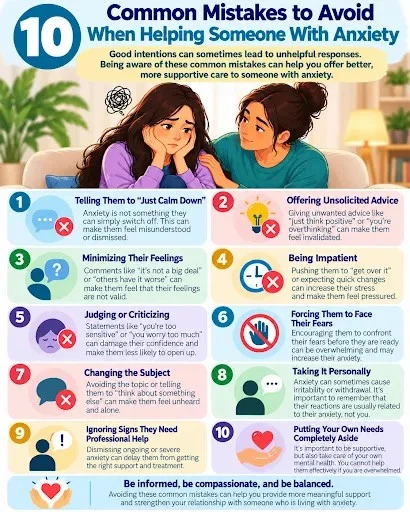
Infographic highlighting common mistakes when helping someone with anxiety, including dismissing feelings, giving unwanted advice, showing impatience, and neglecting personal wellbeing.
Helping someone with anxiety requires patience, understanding, and a willingness to learn what works for that individual. Common mistakes include assuming everyone experiences anxiety in the same way, offering solutions before understanding the problem, expecting quick progress, or treating personal opinions as professional advice. Recognising these patterns can help you offer support that feels respectful, practical, and responsive to the person’s needs.
ASSUMING THE SAME APPROACH WILL WORK FOR EVERYONE
Anxiety affects people differently. One person may appreciate talking through a concern, while another may prefer quiet company or practical assistance. Advice that helped you manage a stressful situation may not be suitable for someone else.
For example, encouraging a friend to attend a crowded social event might seem helpful if you believe getting out of the house will improve their mood. However, the person may need a different kind of support or may want to discuss the situation before deciding what to do.
Instead of assuming you know what will help, ask about their preferences. Be prepared to adjust your approach as you learn more about their experience.
OFFERING SOLUTIONS BEFORE UNDERSTANDING THE PROBLEM
When someone you care about is distressed, it is natural to want to solve the problem quickly. However, immediately suggesting exercise, meditation, lifestyle changes, or a different way of thinking can leave the person feeling that you have not understood their concern.
Consider a family member who is worried about an upcoming medical appointment. Before offering advice, find out what is troubling them. They may be concerned about the uncertainty, the appointment itself, or how to arrange transportation.
Listening first helps you distinguish between situations where the person wants practical assistance and situations where they mainly want to feel heard. You can offer suggestions afterwards, with their permission.
TREATING ANXIETY AS A PERSONALITY FLAW OR A CHOICE
Anxiety should not automatically be interpreted as weakness, attention-seeking, a lack of confidence, or an unwillingness to face challenges. Anxiety experiences can have different causes, and persistent or intense symptoms may require professional assessment.
Labelling someone as overly sensitive or assuming they could stop feeling anxious if they tried harder can create shame and discourage honest conversations. It can also overlook the possibility that the person is struggling with symptoms that affect everyday activities.
Focus on the specific difficulty rather than making judgments about the person’s character. You do not need to understand every aspect of anxiety to treat someone with dignity.
EXPECTING PROGRESS TO HAPPEN QUICKLY OR IN A STRAIGHT LINE
Progress is not always consistent. Someone may feel more comfortable in one situation and still struggle in another. They may also have difficult days after a period when things seemed to be improving.
For example, a colleague who has gradually become more comfortable speaking during small meetings may still feel anxious before a larger presentation. That does not necessarily mean their previous progress has disappeared.
Avoid measuring improvement against a fixed timeline or comparing the person with others. Notice their individual efforts, allow room for setbacks, and encourage them to seek qualified support when anxiety continues to interfere with daily life.
INTERPRETING WITHDRAWAL AS REJECTION
A person experiencing anxiety may sometimes cancel plans, become quieter, or need time away from a demanding situation. These behaviours can have different explanations, and they should not automatically be interpreted as a lack of care or interest in the relationship.
For instance, if a friend declines an invitation, you can let them know that you would still like to spend time together and offer a lower-pressure alternative. At the same time, you do not have to ignore your own feelings if cancellations repeatedly affect your plans.
Keep communication open without assuming you know the reason for the person’s behaviour. Ask respectfully when clarification would help.
SHARING PERSONAL INFORMATION WITHOUT PERMISSION
A person’s mental health experiences are private. Discussing their anxiety with friends, relatives, colleagues, or other people without permission can damage trust, even when your intention is to obtain advice or explain their behaviour.
If you need guidance about supporting someone, consider speaking in general terms without identifying the person or disclosing private details. When professional guidance is needed, use an appropriate service and share only the information necessary.
There may be situations involving immediate danger in which obtaining urgent assistance takes priority over ordinary privacy expectations. Outside such circumstances, respect the person’s choice about who knows their personal information.
RELYING ON UNVERIFIED ONLINE ADVICE
Online articles, videos, and social media posts may offer useful information, but not every mental health claim is reliable. Be cautious about content that promises a guaranteed cure, encourages someone to abandon professional care, or presents one technique as suitable for everyone.
Avoid pressuring a person to follow a remedy simply because it worked for someone online. Instead, look for information from established mental health organisations and encourage the person to discuss treatment-related questions with a qualified healthcare professional.
For reliable starting points, the National Institute of Mental Health (NIMH) provides evidence-informed information about anxiety disorders, symptoms, and treatment.
FORGETTING THAT YOU ARE A SUPPORTER, NOT A MENTAL HEALTH PROFESSIONAL
Being a caring friend, partner, or relative does not require you to identify a disorder, interpret every symptom, or determine which treatment someone needs. Trying to take on that role can create confusion and delay appropriate professional assessment.
You can still make a meaningful difference by listening, helping with everyday tasks when appropriate, and supporting the person’s efforts to access qualified care. If anxiety is persistently disrupting sleep, work, relationships, or other daily activities, encourage them to consider speaking with a healthcare or mental health professional.
If the person appears to be in immediate danger or has a potentially life-threatening medical problem, seek urgent help rather than trying to manage the situation alone.
The most helpful support is not about responding perfectly every time. It is about staying open to feedback, correcting misunderstandings, respecting the person’s individuality, and recognising when additional help may be needed.
11. Frequently Asked Questions
CONCLUSION
Helping someone with anxiety begins with listening, patience, and a willingness to understand their experience without judgment. You do not need to have all the answers or find a solution to every concern. Often, meaningful support comes from being present, communicating with compassion, and offering practical help that respects the person’s preferences and independence.
Remember that supportive communication matters. Acknowledge the person’s feelings, avoid dismissing their concerns, and ask what would be helpful rather than assuming you know. Small gestures, such as checking in, helping with an everyday task, or making time to listen, can help someone feel understood and less alone.
At the same time, supporting someone with anxiety does not mean taking responsibility for their emotional wellbeing. Respecting personal boundaries, allowing room for independence, and recognising your own limitations can help make your support more sustainable. If anxiety persistently interferes with daily life, encourage the person to consider guidance from a qualified mental health professional.
Most importantly, progress may take time, and each person’s experience is different. You may not always know the perfect thing to say, and that is okay. What matters is your willingness to listen, learn, and respond with care.
You cannot remove every uncertainty from another person’s life, but you can help them face difficult moments with greater understanding, dignity, and support.
TRUSTED MENTAL HEALTH RESOURCE
For additional evidence-informed information about anxiety, symptoms, and treatment options, consider these established resources:
- National Institute of Mental Health (NIMH): https://www.nimh.nih.gov/health
- MedlinePlus, U.S. National Library of Medicine: https://medlineplus.gov/mentalhealth.html
- Substance Abuse and Mental Health Services Administration (SAMHSA): Find mental health and treatment services https://www.samhsa.gov/
- 988 Suicide & Crisis Lifeline (United States): https://988lifeline.org/
These resources can help readers find further information and, where appropriate, connect with mental health or crisis support services.
REFERENCES
- National Institute of Mental Health (NIMH). Anxiety Disorders. U.S. Department of Health and Human Services, National Institutes of Health.
- National Institute of Mental Health (NIMH). Panic Disorder: When Fear Overwhelms. U.S. Department of Health and Human Services, National Institutes of Health.
- MedlinePlus. Mental Health. U.S. National Library of Medicine, National Institutes of Health.
- Johns Hopkins Medicine. Anxiety Disorders and Mental Health Information. Johns Hopkins University.
- Substance Abuse and Mental Health Services Administration (SAMHSA). Mental Health Services and Treatment Resources. U.S. Department of Health and Human Services.
- 988 Suicide & Crisis Lifeline. Mental Health Crisis Support and Resources. United States
MEDICAL DISCLAIMER
The information provided in this article is intended for educational and mental health awareness purposes only. It is designed to help readers understand anxiety and explore ways to support someone who may be experiencing it.
This article is not a substitute for professional medical advice, psychological assessment, diagnosis, or treatment. Anxiety can affect individuals differently, and only a qualified healthcare or mental health professional can assess a person’s circumstances and recommend appropriate care.
If anxiety is persistently affecting your daily activities, sleep, work, or relationships, consider consulting a qualified healthcare professional. If you believe someone is experiencing a life-threatening medical emergency or is in immediate danger, contact emergency services.
MentalHealthNest promotes mental health awareness and encourages informed, compassionate conversations about mental wellbeing. Reading this article does not establish a professional relationship between the reader and MentalHealthNest or its author.
Trusted Resources and Related Anxiety Articles
Understanding anxiety often takes time, and reading reliable information can help you recognise common experiences, explore practical coping approaches, and understand when professional support may be useful. If you are supporting someone with anxiety, learning more about anxiety disorders, their symptoms, and their effects on everyday life can also help you respond with greater understanding and compassion.
MentalHealthNest has developed an Anxiety Cluster to help readers explore related topics in a structured way. Each article focuses on a different aspect of anxiety, from overthinking and physical symptoms to relationships, sleep, and professional treatment.
EXPLORE OUR ANXIETY ARTICLES
The following articles cover different aspects of anxiety and are designed to complement one another. You can explore the topics most relevant to your situation or begin with our main anxiety guide for a broader understanding.
1. Anxiety Disorders: Understanding Symptoms, Types, and Treatment
Start with this comprehensive guide to learn about different anxiety disorders, their common symptoms, how they may affect everyday life, and the assessment and treatment options available.
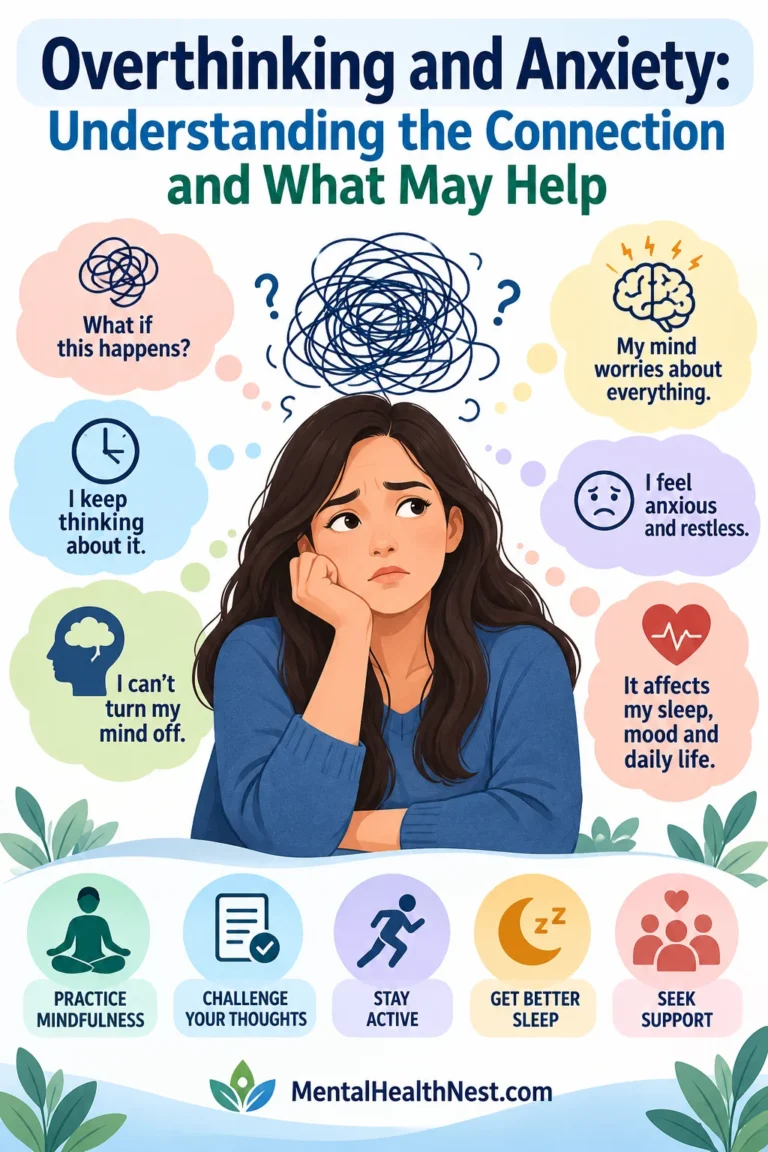
2. Overthinking and Anxiety: Why Your Mind Won’t Slow Down
Explore the relationship between repetitive worrying and anxiety, why thoughts can feel difficult to switch off, and practical approaches that may help.
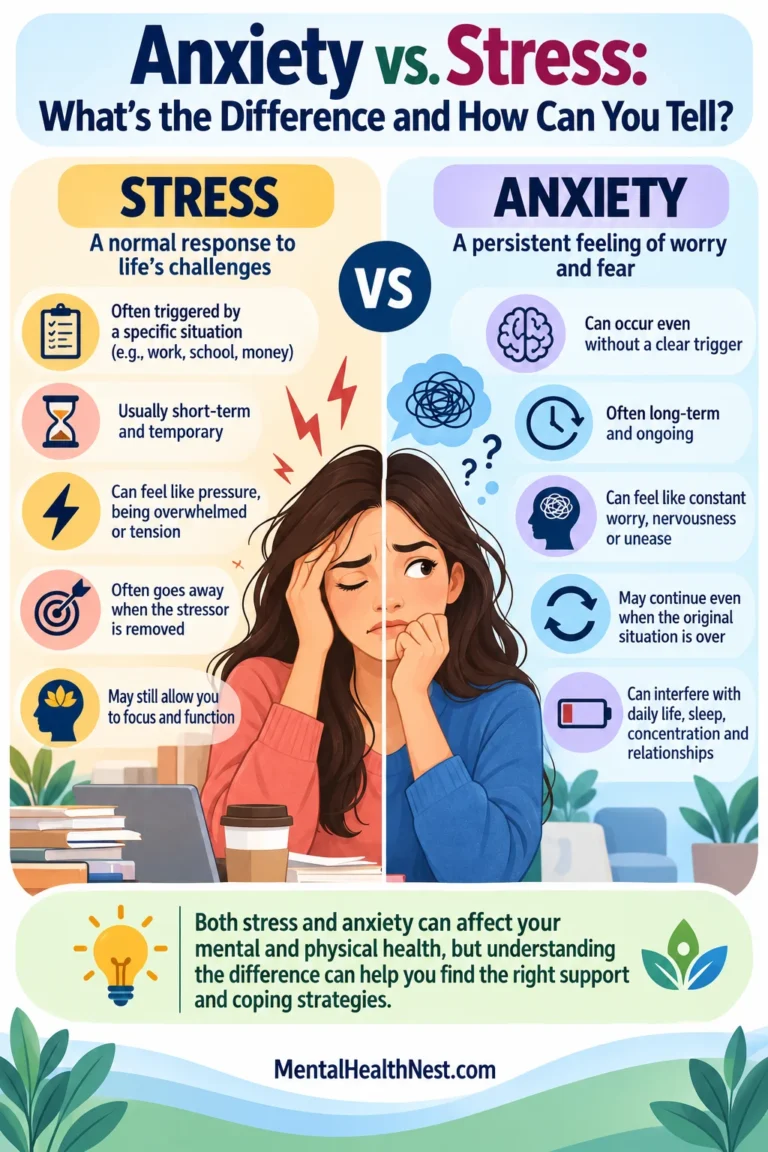
3. Anxiety vs. Stress: What’s the Difference and How Can You Tell?
Understand the differences between anxiety and stress, how they can overlap, and what to consider when either begins affecting everyday life.
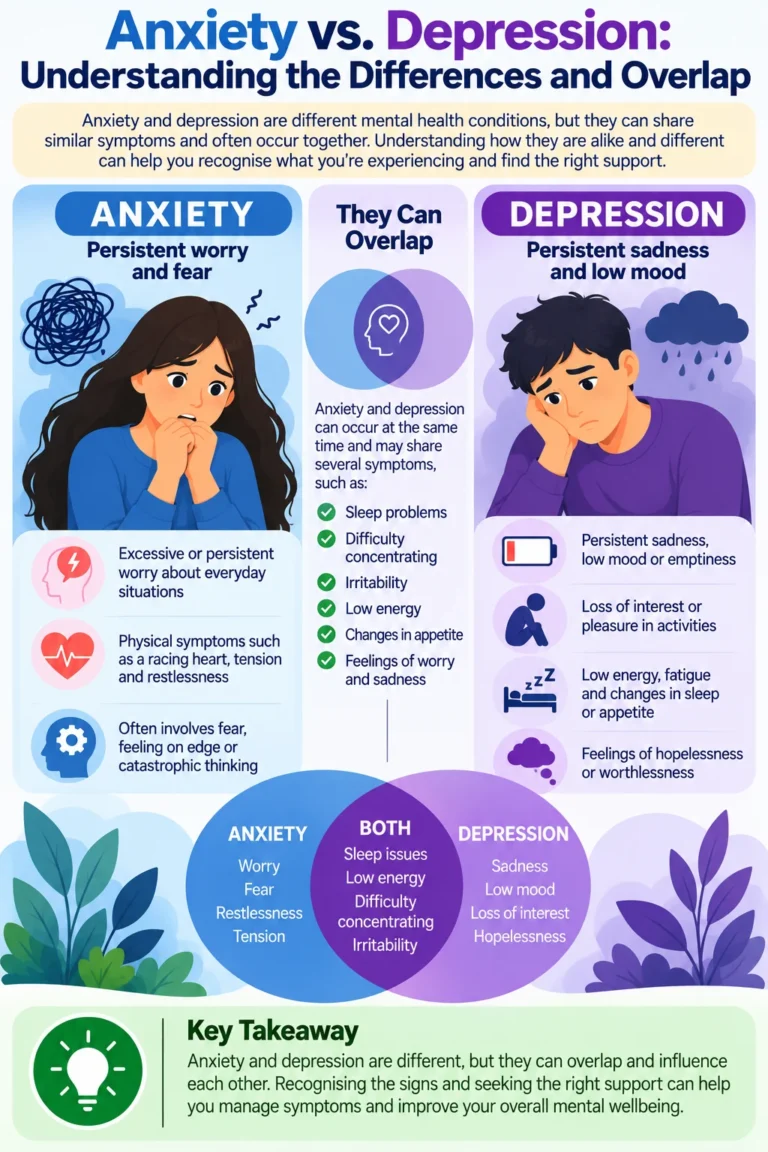
4. Anxiety vs. Depression: Understanding the Differences and Overlap
Learn how anxiety and depression may differ, where their symptoms can overlap, and why recognising the distinction can be helpful.
5. Anxiety and Sleep: Why Anxiety Can Keep You Awake
Discover how anxiety can interfere with sleep, why sleep difficulties and anxious thoughts may reinforce each other, and what may help support better rest.
6. Anxiety and Physical Symptoms: How Anxiety Can Affect the Body
Explore how anxiety may be associated with physical experiences, including muscle tension, a racing heart, and digestive discomfort, while understanding when medical assessment is important.
7. Panic Attacks vs. Anxiety Attacks: What Is the Difference?
Learn about the meaning of panic attacks, how they differ from more general experiences of anxiety, and why the term “anxiety attack” is not a formal clinical diagnosis.
8. Health Anxiety: When Worry About Your Health Becomes Overwhelming
Understand how persistent fears about illness can affect daily life and learn why appropriate medical guidance and mental health support may be beneficial.
9. Social Anxiety in Adults: Symptoms, Causes, and What May Help
Explore how fear of judgment or embarrassment can affect social situations, relationships, work, and participation in everyday activities.
10. Anxiety at Work: How Workplace Stress Can Affect Mental Health
Learn how workplace pressures and anxiety may interact, how work-related worries can affect wellbeing, and what practical support may be available.
11. Anxiety and Relationships: Why Anxiety Can Affect Connection and Communication
Discover how anxiety may influence communication, trust, reassurance, and emotional connection, and explore ways to approach relationship difficulties with understanding.
12. How to Calm an Anxious Mind: Practical Strategies for Managing Anxiety
Explore practical strategies that may help you respond to anxious thoughts and feelings, manage everyday worries, and recognise when additional support is appropriate.
13. When Does Anxiety Become a Problem?
Learn when anxiety may be more than an occasional response to stress, particularly when it becomes persistent, difficult to manage, or disruptive to everyday activities.
WHY READING RELATED ANXIETY ARTICLES CAN HELP
Anxiety is a broad topic, and no single article can address every question a reader may have. Exploring related articles can help you understand how anxiety may affect thoughts, physical wellbeing, sleep, work, and relationships.
For example, if you are supporting someone whose anxiety affects their relationships, you may also find our articles on anxiety and relationships, overthinking, and practical anxiety-management strategies useful. If you want to understand whether the person’s difficulties may require professional attention, our main guide to anxiety disorders and our article on when anxiety becomes a problem provide useful starting points.
You do not need to read every article at once. Begin with the topic most relevant to your current concerns, then explore related guides when you want a broader understanding.
A note for readers:
MentalHealthNest provides educational mental health information to support awareness and understanding. Our articles are not a substitute for an individual assessment, diagnosis, or treatment plan from a qualified healthcare professional. If anxiety is significantly affecting your life or the life of someone you care about, consider seeking appropriate professional guidance.
Every article is designed to help you make informed decisions, strengthen your mental wellbeing, and connect with trusted professional support when needed.
ABOUT THE AUTHOR
Sujit Shetty — Founder of MentalHealthNest.com
Sujit Shetty is the founder of MentalHealthNest.com, a mental health awareness platform dedicated to making mental health information more accessible and understandable for readers, families, caregivers, and communities.
Through MentalHealthNest, he focuses on creating educational content about anxiety, stress, emotional wellbeing, mental health conditions, and practical approaches to understanding mental health challenges. His work aims to encourage informed conversations, reduce stigma, and help readers find reliable information when exploring mental health topics.
As a mental health advocate rather than a licensed healthcare professional, Sujit emphasises the importance of evidence-informed information and encourages readers to consult qualified professionals for individual assessment, diagnosis, and treatment.
His goal is to help people better understand mental health and approach themselves and others with greater awareness, compassion, and respect.
•Respect for therapists, psychologists, psychiatrists, and other healthcare professionals
MentalHealthNest.com aims to become one of the web’s most trusted educational resources for mental health while connecting readers with qualified mental health professionals through its growing therapist directory.