Introduction
For some adults, an ordinary social interaction can involve much more than simply meeting someone or having a conversation. A workplace meeting, a family gathering, an unfamiliar social event or even making a phone call may bring an uncomfortable fear of being judged, embarrassed or misunderstood.
They may spend hours thinking about what to say before meeting someone, worry about how others perceive them during a conversation, and replay the interaction afterwards, wondering whether they said something wrong.
These experiences can be emotionally exhausting, particularly when the person wants to connect with others but feels held back by persistent self-consciousness and fear of negative evaluation.
Social anxiety is more than occasional nervousness or a preference for spending time alone. When the fear becomes persistent, difficult to manage and disruptive to everyday activities, it may be associated with social anxiety disorder, also known as social phobia.
Adults experiencing social anxiety may find it difficult to participate in meetings, develop friendships, attend social gatherings, pursue relationships or express themselves comfortably in situations where they feel observed or evaluated.
However, social anxiety does not have to define someone’s personality or determine what they can achieve in life. Understanding the patterns behind it can help people recognise when additional support may be useful and explore appropriate ways to move forward.
In this guide, we will examine what social anxiety means in adulthood, why it may develop, how it can influence everyday experiences and what evidence-informed treatment and support options are available.
If you have read our earlier MentalHealthNest guides on anxiety, sleep, physical symptoms and overthinking, this article explores a different part of the subject: the fear of being evaluated by other people and how it can affect social connection. We hope it adds a useful perspective to your understanding.
QUICK ANSWER
Social anxiety in adults involves persistent fear or anxiety about social situations in which a person may feel observed, judged, embarrassed or negatively evaluated. It can affect conversations, relationships, workplace participation and everyday activities. When these fears cause significant distress or interfere with daily functioning, professional assessment may help determine whether social anxiety disorder is present. Evidence-based treatment, including appropriately tailored cognitive behavioral therapy, can help many people manage these difficulties.
KEY TAKEAWAYS
- Social anxiety is more than shyness: It involves persistent fear of negative evaluation in social or performance situations.
- It can affect everyday adult life: Conversations, workplace meetings, friendships, dating and social gatherings may become difficult.
- Fear of judgment is central: People may worry excessively about embarrassment, criticism, rejection or appearing uncomfortable.
- Avoidance can maintain the difficulty: Avoiding feared situations may bring temporary relief while making future participation feel more challenging.
- It can have several contributing factors: Genetics, temperament, life experiences and environmental influences may all play a role.
- Social anxiety is not a personal weakness: Experiencing these difficulties does not mean someone lacks intelligence, social ability or the desire to connect with others.
- Professional support is available: Cognitive behavioral therapy specifically designed for social anxiety is an established treatment option. Other approaches may also be considered.
- Improvement is possible: With appropriate support and an individualised approach, people can work towards greater confidence and more comfortable social participation.
1. What Is Social Anxiety in Adults?
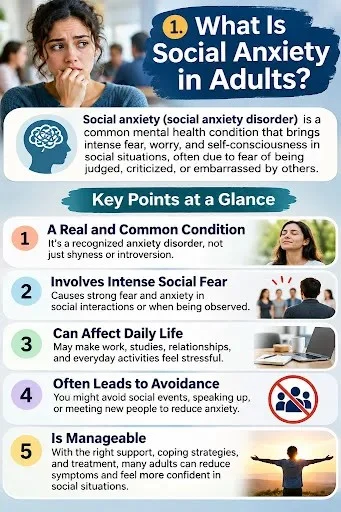
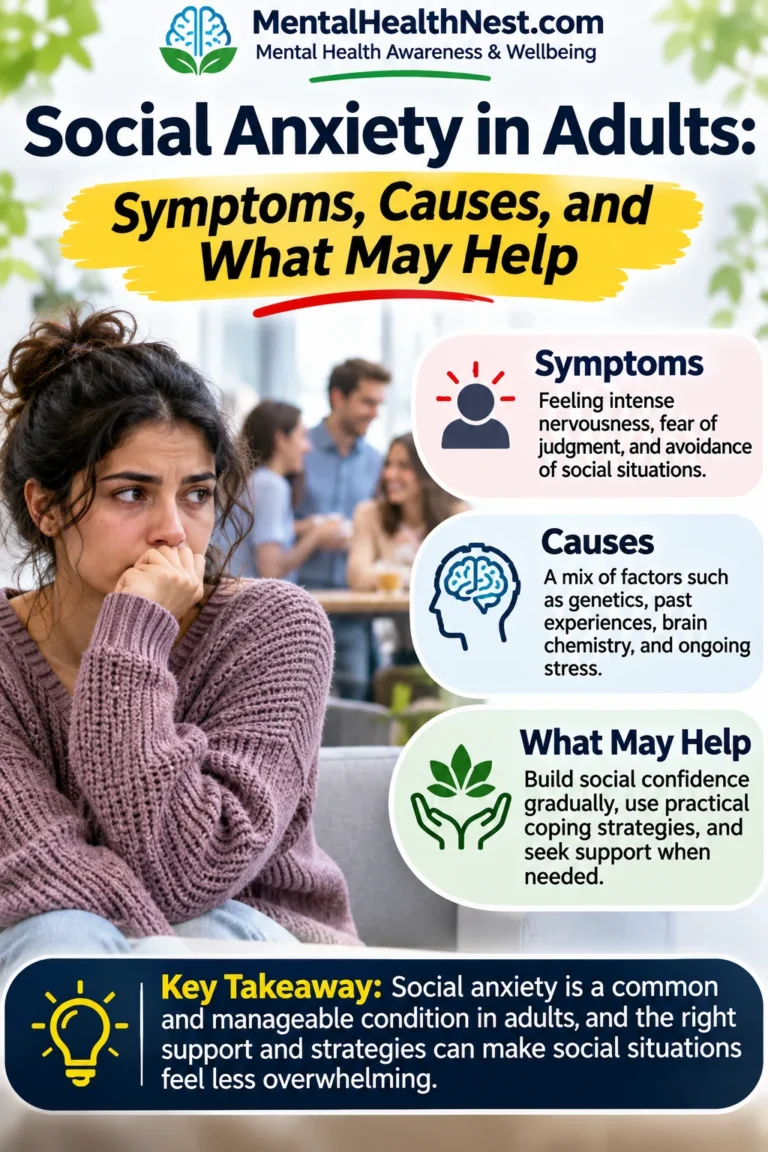
This infographic explains social anxiety disorder in adults, highlighting its defining features, including intense fear, worry, and self-consciousness in social situations. It emphasizes that social anxiety is a recognized mental health condition rather than simply shyness or introversion. It also illustrates how social anxiety can affect everyday activities and how appropriate support and treatment can help.
Social anxiety in adults is a persistent fear of being judged, embarrassed, criticised, or negatively evaluated in social situations. It can make everyday interactions feel emotionally demanding, particularly when someone believes that other people are closely observing their behaviour, appearance, words, or performance. When this fear becomes intense, persistent, and interferes with everyday functioning, it may indicate social anxiety disorder.
UNDERSTANDING SOCIAL ANXIETY
Social anxiety is closely connected to how a person anticipates and interprets other people’s reactions. Someone experiencing it may feel unusually exposed when speaking in a group, meeting unfamiliar people, contributing an opinion, or interacting with someone whose approval matters to them.
The concern is not necessarily that they dislike other people or want to avoid relationships. In many cases, they genuinely want to participate, communicate comfortably, make friends, and feel included. However, the possibility of being embarrassed, rejected, misunderstood, or judged can make these interactions difficult.
For example, imagine an employee who has a useful idea during a workplace meeting. They want to share it but become preoccupied with how colleagues might respond. They may worry about sounding inexperienced, making a mistake, or attracting unwanted attention. Even when they have something valuable to contribute, the fear of negative evaluation can make speaking up feel difficult.
Experiences like this help illustrate why social anxiety should not be dismissed as simply being quiet or reserved.
WHAT IS SOCIAL ANXIETY DISORDER?
Social anxiety disorder, also called social phobia, is a recognised mental-health condition involving persistent and significant fear of social or performance situations where a person may experience scrutiny or negative evaluation.
The fear may involve situations such as meeting unfamiliar people, speaking in front of others, participating in conversations, attending social gatherings, or carrying out ordinary activities while feeling observed.
A person may avoid these situations or endure them with considerable distress. For a clinical diagnosis, the fear must meet established diagnostic requirements, including persistence over time and meaningful interference with everyday functioning.
Social anxiety disorder is recognised in clinical mental-health guidance and is not a character flaw, lack of intelligence, or personal failure.
SOCIAL ANXIETY CAN LOOK DIFFERENT IN DIFFERENT ADULTS
Not everyone experiences social anxiety in the same way.
One adult may find workplace presentations particularly difficult, while another may struggle with meeting new people, speaking in groups, or attending social gatherings. Some may be comfortable interacting with familiar friends but feel considerably less comfortable in unfamiliar environments.
Others may appear confident in professional settings while privately experiencing significant worry about how they are perceived.
This variation matters because social anxiety is not always obvious to colleagues, friends, or family members. Someone may continue meeting responsibilities and participating in everyday activities while finding these experiences much more emotionally demanding than others realise.
It is also important not to assume that every quiet person or someone who prefers smaller gatherings has social anxiety. Personal preferences and clinical difficulties are not the same thing.
WHY UNDERSTANDING SOCIAL ANXIETY MATTERS
Social anxiety can be difficult to explain, particularly when someone feels that other people do not understand why ordinary interactions seem so challenging.
They may question themselves, feel frustrated about missed opportunities, or wonder why situations that appear comfortable for others require so much emotional effort.
A more informed understanding can help replace unfair self-judgment with greater awareness. It also makes it easier to recognise when persistent social fears deserve attention and when professional support may be beneficial.
An important reminder: Experiencing discomfort in social situations does not automatically mean someone has social anxiety disorder. Only an appropriately qualified healthcare professional can assess whether a person’s experiences meet the criteria for a clinical diagnosis.
2. Social Anxiety vs. Shyness and Introversion: What Is the Difference?
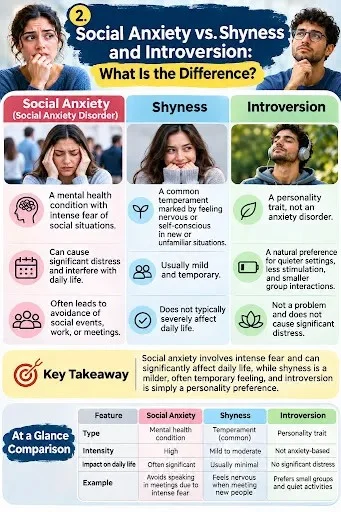
This comparison infographic explains the differences between social anxiety disorder, shyness, and introversion. It compares their characteristics, emotional intensity, impact on daily life, and typical social preferences. The visual highlights that social anxiety can cause significant distress, while shyness is a common temperament and introversion is a personality trait.
Social anxiety, shyness and introversion can sometimes look similar from the outside. A person may speak less in groups, prefer smaller gatherings or take time to feel comfortable around unfamiliar people. However, these experiences are not interchangeable. Shyness generally describes discomfort or hesitation in certain social situations, introversion relates to personality and social preferences, while social anxiety involves fear of negative evaluation that may cause significant distress or interfere with everyday life.
UNDERSTANDING THE DIFFERENCE BETWEEN THESE EXPERIENCES
The main difference is not simply how much someone talks or how often they socialise. It is also about what they experience internally and how their feelings influence their choices.
A shy adult may initially feel uncomfortable when meeting unfamiliar people but gradually become more relaxed as the conversation develops. An introverted adult may enjoy social connections but prefer quieter environments or smaller groups.
Someone experiencing social anxiety, however, may become preoccupied with the possibility of being judged, making mistakes or embarrassing themselves. This fear can remain strong even when they want to participate and may lead them to avoid situations that matter to them.
These distinctions are important because outward behaviour alone cannot establish whether someone is experiencing social anxiety.
SOCIAL ANXIETY VS. SHYNESS
Shyness is a common personality-related tendency involving hesitation, self-consciousness or discomfort in certain social situations. It is not, by itself, a mental-health disorder.
For example, someone who feels shy at a networking event may initially struggle to start conversations. However, after meeting a few people, they might become more comfortable and enjoy participating.
Social anxiety can involve a more persistent and distressing fear of negative evaluation. Someone may spend considerable time anticipating an interaction, worry about being embarrassed during it, and continue thinking about perceived mistakes afterwards.
The distinction becomes particularly important when these fears interfere with work, relationships, education or other meaningful activities.
SOCIAL ANXIETY VS. INTROVERSION
Introversion is a personality trait, not a mental-health diagnosis. Introverted people may prefer quiet surroundings, individual activities, meaningful conversations or smaller social gatherings.
An introverted adult can enjoy friendships, attend social events and communicate confidently when they choose to do so. Their preference for less social stimulation does not necessarily involve fear of criticism or embarrassment.
Social anxiety is different because the difficulty is connected more closely to fear and perceived social evaluation than to a preference for quieter environments.
For instance, an introverted person may decline a large gathering because they would rather spend the evening reading or relaxing. Someone experiencing social anxiety may want to attend the same gathering but feel held back by worries about how others will perceive them.
Neither personality preference nor social participation alone tells the complete story.
CAN SOMEONE BE BOTH INTROVERTED AND SOCIALLY ANXIOUS?
Yes. Introversion and social anxiety can occur together because they describe different aspects of a person’s experience.
An introverted adult may also experience significant fear of negative evaluation. Similarly, an extroverted person who generally enjoys social interaction can still experience social anxiety in particular situations.
Personality does not determine whether someone develops a mental-health condition. It is therefore important to avoid assuming that every introverted person is socially anxious or that socially confident people cannot experience social anxiety.
WHY THESE DIFFERENCES MATTER
Confusing shyness or introversion with social anxiety can lead to misunderstandings.
Someone may unnecessarily worry that their quiet personality needs to be changed. Another person may dismiss persistent social distress as simply being shy, even when it is interfering with important parts of their life.
The more useful question is not whether someone is outgoing or reserved. It is whether fear of judgment causes persistent distress, restricts meaningful activities or makes everyday interactions difficult.
Understanding this distinction allows people to respect their natural personality while recognising when additional support may be helpful.
A gentle reminder: You do not have to become the most talkative person in a room to have meaningful relationships or a fulfilling social life. Being reserved is not a problem that needs fixing. The concern is when fear, rather than personal preference, begins limiting the activities and connections that matter to you.
3. Common Signs and Symptoms of Social Anxiety in Adults
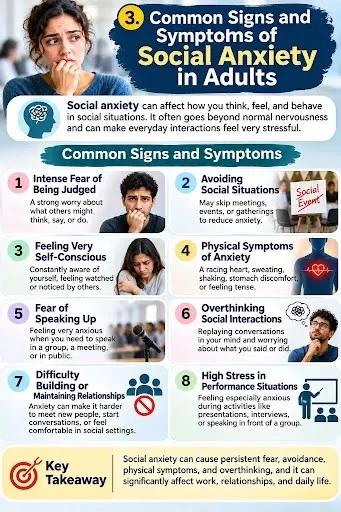
This infographic illustrates eight common signs and symptoms of social anxiety in adults, including fear of being judged, avoiding social situations, feeling self-conscious, physical anxiety symptoms, fear of speaking up, overthinking social interactions, difficulty building relationships, and stress during performance situations.
Social anxiety in adults can involve emotional, cognitive, behavioural and physical symptoms that arise in situations where someone feels exposed to possible judgment or criticism. These experiences may include intense self-consciousness, fear of embarrassment, difficulty speaking, avoidance of social interactions and physical reactions such as sweating or trembling. Their intensity and impact can vary from person to person.
EMOTIONAL AND PSYCHOLOGICAL SIGNS
For many adults, social anxiety begins with an uncomfortable awareness of how other people might perceive them. Even ordinary interactions can bring concerns about saying something inappropriate, appearing inexperienced or attracting unwanted attention.
Common emotional and psychological experiences may include:
- Fear of negative evaluation: Worrying that others will consider you awkward, unintelligent, uninteresting or incompetent.
- Excessive self-consciousness: Feeling unusually aware of your appearance, voice, facial expressions or behaviour when other people are present.
- Fear of embarrassment: Becoming distressed by the possibility of making a mistake, stumbling over words or attracting attention.
- Anticipatory worry: Feeling anxious before an upcoming meeting, conversation, presentation or social gathering.
- Difficulty expressing opinions: Holding back thoughts or questions because of concern about how others might respond.
- Fear of rejection: Worrying that a conversation or interaction could lead to criticism, disapproval or exclusion.
These experiences can be particularly frustrating when someone knows what they want to say but finds it difficult to express themselves comfortably.
Cognitive Signs: WHAT MAY HAPPEN IN THE MIND?
Social anxiety can influence how people interpret social situations and evaluate their own behaviour.
Someone may become so focused on the possibility of making a mistake that it becomes difficult to concentrate on the actual conversation.
Common cognitive experiences include:
- Negative predictions: Expecting that a conversation will go badly or that other people will react unfavourably.
- Mind going blank: Finding it difficult to organise thoughts or remember what to say when feeling observed.
- Self-monitoring: Paying close attention to one’s voice, facial expressions, posture or gestures during an interaction.
- Assuming negative judgments: Interpreting an uncertain facial expression or brief response as evidence that someone disapproves.
- Post-event rumination: Repeatedly reviewing a conversation afterwards and focusing on moments that felt uncomfortable.
- Difficulty staying present: Becoming more concerned about how one is being perceived than about what the other person is saying.
Consider someone who attends a professional networking event. Although several conversations go reasonably well, they may spend the journey home thinking about one awkward pause or a sentence they wish they had expressed differently.
The interaction may have been perfectly ordinary to everyone else, yet the person continues questioning their performance.
BEHAVIOURAL SIGNS: HOW SOCIAL ANXIETY MAY INFLUENCE ACTIONS
Social anxiety does not always appear as an obvious refusal to participate. Sometimes, it influences small everyday decisions that gradually restrict social involvement.
Possible behavioural signs include:
- Avoiding conversations with unfamiliar people.
- Declining invitations because of anticipated embarrassment.
- Avoiding speaking during meetings, even when having something useful to contribute.
- Choosing positions or activities that reduce the possibility of being noticed.
- Finding it difficult to initiate friendships or maintain social connections.
- Avoiding situations where attention may be directed towards them.
- Depending on a familiar companion to feel more comfortable in unfamiliar social settings.
Some adults may also rely on what psychologists call safety behaviours. These are actions intended to reduce perceived social risk, such as carefully rehearsing every sentence, speaking as little as possible or repeatedly checking how they appear to others.
Such behaviours may provide temporary reassurance, but they can sometimes prevent people from discovering that a social interaction can go acceptably even without extensive preparation.
Importantly, not every preference for avoiding a gathering or limiting conversation indicates social anxiety. The wider pattern, the underlying fear and its impact on everyday functioning matter.
PHYSICAL SIGNS DURING SOCIAL SITUATIONS
Social anxiety can also involve physical reactions when someone anticipates or enters a situation involving possible scrutiny.
Depending on the individual, these may include:
- Blushing or feeling unusually warm.
- Sweating.
- Trembling or shaking.
- A noticeably rapid heartbeat.
- Nausea or an unsettled stomach.
- Muscle tension or a rigid body posture.
- A shaky or unusually quiet voice.
- Difficulty maintaining eye contact.
- Feeling lightheaded or experiencing a dry mouth.
These reactions may become an additional source of worry. For example, someone who fears being noticed while speaking may become concerned that other people will see their hands trembling or hear their voice shaking.
This can create another layer of self-consciousness during an already uncomfortable interaction.
However, these physical experiences are not specific to social anxiety. They can occur for many reasons, and their presence alone cannot establish a mental-health diagnosis.
SIGNS BEFORE, DURING AND AFTER A SOCIAL INTERACTION
One useful way to understand social anxiety is to consider how it may influence the experience surrounding a social event, rather than looking only at what happens during the interaction.
Before the interaction
A person may repeatedly imagine what could go wrong, rehearse conversations or consider avoiding the event altogether.
During the interaction
They may become highly conscious of their behaviour, struggle to express their thoughts or focus more on possible judgment than on the conversation itself.
After the interaction
They may revisit particular moments, question their responses or interpret ordinary conversational pauses as signs that something went wrong.
Not everyone experiences all three stages, and these patterns can vary across different situations.
WHEN DO THESE SIGNS DESERVE ATTENTION?
Occasional nervousness before meeting unfamiliar people or speaking in front of an audience is a normal human experience.
The concern becomes more significant when fear of negative evaluation is persistent, causes substantial distress or repeatedly interferes with activities that matter to someone.
For example, an adult may begin turning down professional opportunities, avoiding friendships or withdrawing from social experiences they genuinely want to enjoy.
If these difficulties are affecting everyday functioning, speaking with a qualified mental-health professional or healthcare provider may help clarify what is happening and whether additional support would be beneficial.
A thought worth remembering: People experiencing social anxiety may be making considerable emotional efforts simply to participate in situations that others find routine. Their difficulties are not always visible. A little understanding, patience and freedom from judgment can make social interactions more respectful and supportive.
4. What Causes Social Anxiety in Adults?
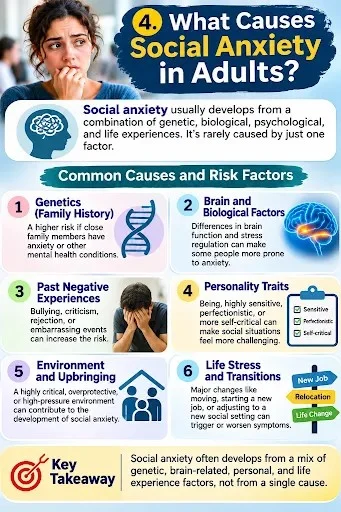
This infographic explains six possible contributing factors and risk factors associated with social anxiety in adults. These include family history and genetics, brain and biological factors, negative past experiences, personality traits, environment and upbringing, and major life stressors or transitions. It highlights that social anxiety generally develops through a combination of factors rather than a single cause.
Social anxiety in adults does not have one single known cause. Research suggests that a combination of genetic, biological, psychological and environmental factors may contribute to its development. Family history, temperament, difficult social experiences and the way someone learns to interpret social situations may all play a role. These influences vary between individuals, and no single factor determines whether someone will develop social anxiety.
GENETIC AND FAMILY INFLUENCES
Research suggests that genetic factors may contribute to a person’s vulnerability to social anxiety. Adults with a family history of anxiety disorders may have a greater likelihood of experiencing similar difficulties, although family history does not mean that someone will inevitably develop the condition.
Both inherited characteristics and shared family experiences may influence how individuals respond to unfamiliar or socially demanding situations.
For example, a person may grow up in an environment where social interactions are frequently approached with worry or where mistakes are strongly criticised. These experiences may influence how they interpret social situations later in life.
However, it is important not to blame parents or family members. Family influences are only one possible part of a much broader picture.
BRAIN FUNCTION AND THE FEAR RESPONSE
The brain plays an important role in how people recognise and respond to perceived threats, including situations involving possible social judgment.
Researchers have studied brain circuits involved in processing fear and emotional responses in relation to social anxiety. Differences in how these systems respond to social information may contribute to heightened sensitivity to perceived criticism or negative evaluation.
However, social anxiety cannot be explained by one brain structure or a single chemical imbalance. It involves complex interactions between brain function, inherited vulnerability, psychological processes and environmental experiences.
Understanding this complexity is important because it helps move the conversation away from the idea that social anxiety reflects a personal weakness or something fundamentally wrong with an individual.
DIFFICULT SOCIAL EXPERIENCES AND PAST REJECTION
Unpleasant social experiences may contribute to the development of social anxiety in some people.
Experiences such as bullying, repeated criticism, humiliation, rejection or being publicly embarrassed can influence how someone approaches future interactions.
Consider an adult who was repeatedly mocked when expressing opinions during earlier school years. Even after entering a more supportive workplace, they may continue to worry that speaking up will attract criticism.
The present situation may be different, but earlier experiences can influence how the person anticipates and interprets social interactions.
This does not mean that everyone who experiences rejection or bullying will develop social anxiety. Many people go through difficult social experiences without developing the disorder. Individual vulnerability, circumstances and other influences matter.
TEMPERAMENT AND EARLY PERSONALITY PATTERNS
Temperament refers to relatively consistent ways in which people respond to unfamiliar situations, emotional experiences and their surroundings.
Some individuals are naturally more cautious, reserved or sensitive when meeting unfamiliar people. These characteristics do not automatically indicate social anxiety disorder.
However, research suggests that certain temperamental patterns, including behavioural inhibition, may be associated with a greater vulnerability to developing social anxiety.
Behavioural inhibition describes a tendency to respond cautiously or withdraw from unfamiliar people and situations.
An important distinction is that temperament is not destiny. A naturally reserved person can develop comfortable social relationships, communicate confidently and participate fully in activities that matter to them.
ENVIRONMENTAL AND SOCIAL INFLUENCES
The environments in which people live, study and work can influence how comfortable they feel around others.
Repeated criticism, exclusion, discrimination, highly judgmental environments or experiences of social rejection may contribute to concerns about acceptance and negative evaluation.
For example, an adult working in an environment where mistakes are regularly ridiculed may gradually become increasingly hesitant to express opinions or participate in discussions.
Similarly, repeated negative experiences in relationships or social groups may make some individuals more cautious about revealing their thoughts or feelings.
These circumstances do not independently establish a cause of social anxiety disorder. Rather, they may interact with other vulnerabilities and experiences.
CAN SOCIAL ANXIETY DEVELOP OR BECOME NOTICEABLE IN ADULTHOOD?
Social anxiety disorder often begins during childhood or adolescence, although its effects may continue into adult life.
Some people recognise their difficulties only when adult responsibilities introduce new social demands. Starting a new job, attending professional meetings, developing relationships, becoming a parent or entering unfamiliar social environments may make previously manageable fears more noticeable.
For example, someone who rarely needed to speak in groups earlier in life may find workplace presentations or professional networking particularly challenging.
This does not necessarily mean that the condition began in adulthood. Sometimes, changing circumstances simply expose difficulties that were previously less noticeable.
If persistent social fears begin affecting important areas of adult life, professional assessment can help clarify their nature.
WHY THERE IS NO SINGLE EXPLANATION
Two adults may experience very similar social anxiety while having completely different personal histories.
One person may have a family history of anxiety, while another may associate their difficulties with repeated negative social experiences. Someone else may have several contributing influences without being able to identify a particular starting point.
This is why social anxiety should not be reduced to a single explanation.
Understanding possible contributing factors can provide useful context, but identifying an exact cause is not always possible or necessary before seeking support.
A thought worth remembering: You do not have to identify one particular experience that explains your social anxiety before you deserve understanding or support. Your experiences are valid even when the reasons behind them are not entirely clear. What matters is recognising how these difficulties affect your life and understanding that appropriate help is available.
5. How Social Anxiety Can Affect Everyday Adult Life
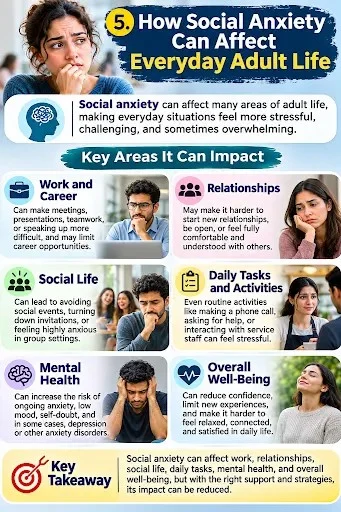
This infographic highlights six areas of adult life that social anxiety may affect, including work and career, relationships, social life, daily activities, mental health, and overall wellbeing. It explains how fear of social interactions can make routine responsibilities and personal connections more challenging.
Social anxiety can affect several areas of adult life, including work, friendships, romantic relationships, family interactions and everyday decision-making. The fear of negative evaluation may make people hesitate to pursue opportunities, express their opinions or participate in activities they value. Over time, these difficulties can affect social connection, professional development and personal wellbeing, although the impact varies considerably between individuals.
THE IMPACT ON WORK AND PROFESSIONAL OPPORTUNITIES
Workplaces often involve situations where people need to communicate, share ideas, attend meetings, collaborate with colleagues or present information.
For an adult experiencing social anxiety, these ordinary professional responsibilities may become particularly demanding.
Someone may have valuable knowledge but hesitate to contribute during meetings because they worry about being criticised. Another person may avoid networking events, struggle to approach colleagues or turn down opportunities that involve public speaking.
These difficulties can sometimes affect professional visibility and career development, particularly when an employee’s abilities are not reflected in their willingness to participate.
It is important to recognise that social anxiety does not mean someone lacks professional competence. A person may be highly skilled, knowledgeable and capable while finding certain workplace interactions difficult.
Supportive management, respectful communication and reasonable opportunities to participate can help create a more comfortable working environment.
FRIENDSHIPS AND SOCIAL CONNECTIONS
Friendships often develop through shared activities, conversations and repeated social interactions.
Social anxiety may make these experiences harder to initiate or maintain. Someone may want to make new friends but feel uncomfortable approaching unfamiliar people, joining group conversations or attending social gatherings.
They may also hesitate to contact existing friends because they worry about being inconvenient, saying something inappropriate or receiving an unfavourable response.
Over time, these difficulties can reduce opportunities for connection.
For example, an adult may repeatedly decline invitations from colleagues or acquaintances despite genuinely wanting to develop closer friendships. Others may gradually stop extending invitations because they misunderstand the person’s reluctance as a lack of interest.
This can create distance even when both sides would welcome a closer connection.
ROMANTIC RELATIONSHIPS AND EMOTIONAL CONNECTION
Developing romantic relationships often involves meeting unfamiliar people, communicating personal feelings and allowing another person to become emotionally close.
For someone experiencing social anxiety, these situations may involve additional uncertainty.
They may find it difficult to initiate conversations, express affection, communicate personal needs or discuss disagreements. Concerns about rejection or negative judgment may also make emotional openness more challenging.
Even within an established relationship, someone may hesitate to express dissatisfaction or raise sensitive subjects because they fear upsetting their partner or being misunderstood.
This does not mean that people with social anxiety cannot develop healthy and meaningful relationships. Rather, it highlights how fear of evaluation may sometimes interfere with communication and emotional connection.
Patience, mutual understanding and supportive communication can make a meaningful difference.
FAMILY INTERACTIONS AND SOCIAL EXPECTATIONS
Family gatherings, celebrations and important occasions often involve interacting with several people at once.
Some adults may find these situations uncomfortable, particularly when relatives ask personal questions, make comparisons or expect them to participate in conversations.
For example, someone attending a family celebration may feel pressured to explain their career, relationship status or personal decisions. Even ordinary questions can become stressful when the person worries about being judged.
Misunderstandings may arise when family members interpret withdrawal or quietness as rudeness, disinterest or unwillingness to participate.
A better understanding of social anxiety can encourage families to offer support without pressuring someone to behave in a particular way.
EVERYDAY RESPONSIBILITIES AND INDEPENDENCE
Social interactions are not limited to friendships, workplaces or special occasions. Many ordinary responsibilities involve communicating with unfamiliar people.
These may include:
- Asking a shop assistant for help.
- Making an appointment over the phone.
- Speaking with a landlord or property manager.
- Asking questions during a class or training session.
- Contacting customer service.
- Attending community activities.
- Introducing oneself to neighbours.
When these activities involve substantial fear of judgment, someone may postpone them or depend on another person to handle the interaction.
This can gradually affect independence and confidence in managing everyday responsibilities.
The difficulty is not necessarily the task itself. It may be the anticipated social interaction involved in completing it.
PERSONAL GOALS, CONFIDENCE AND MISSED OPPORTUNITIES
Social anxiety may also influence decisions about education, career development, travel, hobbies and personal interests.
Someone might avoid applying for a position that requires interviews, decline an opportunity to speak at an event or miss a class because participation involves interacting with unfamiliar people.
These decisions can be particularly disappointing when the individual genuinely wants the opportunity but feels unable to approach it comfortably.
Repeatedly stepping away from meaningful experiences may also affect how someone views their own abilities.
However, it is important not to interpret every declined invitation or missed opportunity as a sign of social anxiety. Personal priorities, preferences, financial circumstances and other practical considerations also influence decisions.
The relevant concern is a recurring pattern in which fear of social evaluation prevents someone from pursuing activities they would otherwise value.
THE EMOTIONAL COST OF FEELING DISCONNECTED
One of the less visible difficulties associated with social anxiety is the gap that can develop between wanting connection and feeling able to participate comfortably.
An adult may have people around them yet still feel misunderstood or disconnected. They may want to contribute more during conversations, develop friendships or participate in community activities but find these experiences emotionally demanding.
This can sometimes contribute to loneliness, frustration or reduced confidence.
These experiences are not inevitable, and social anxiety does not determine someone’s future relationships or quality of life. Understanding the difficulties is an important step towards recognising where support and change may be helpful.
A reminder for readers: If social anxiety has caused you to step away from opportunities or relationships that matter to you, it does not mean you have failed. Your difficulties deserve understanding rather than criticism. You can respect your own pace while exploring ways to participate more comfortably in the parts of life that are important to you.
6. Why Fear of Judgment and Avoidance Can Reinforce Social Anxiety
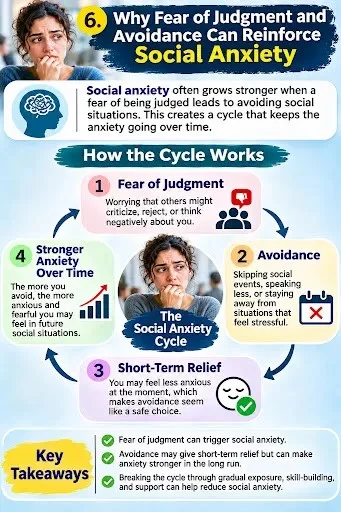
This infographic illustrates the social anxiety cycle, showing how fear of judgment can lead to avoidance of social situations. Although avoidance may provide temporary relief, it can reinforce anxiety over time. The visual explains how gradual exposure, developing social skills, and appropriate support may help interrupt this cycle.
Fear of judgment and avoidance can reinforce social anxiety by creating a repeating cycle of anticipation, discomfort, withdrawal and temporary relief. When someone avoids a situation because they fear embarrassment or criticism, they may feel better briefly. However, they lose opportunities to discover that the interaction might have been manageable. Over time, this pattern can make similar situations feel increasingly difficult.
HOW THE SOCIAL ANXIETY CYCLE DEVELOPS
Social anxiety can be maintained by the way a person anticipates, experiences and remembers social interactions.
Imagine an employee who has been invited to contribute to a team discussion. Before the meeting, they begin wondering whether their ideas will sound convincing or whether colleagues might disagree with them.
As the meeting approaches, their attention becomes increasingly focused on possible negative reactions. They consider remaining silent rather than risking an uncomfortable experience.
If they avoid contributing, they may experience immediate relief. However, they also miss an opportunity to discover how colleagues might actually have responded.
The next time a similar meeting takes place, the same concerns may return.
This is one way avoidance can reinforce social anxiety. The person receives temporary relief without getting the opportunity to reconsider the feared prediction.
WHY AVOIDANCE CAN FEEL COMFORTING AT FIRST
Avoidance is often an attempt to protect oneself from an anticipated uncomfortable experience.
Someone may decline an invitation, avoid starting a conversation or remain silent during a discussion because doing so seems easier than facing the possibility of embarrassment.
The immediate reduction in discomfort can make avoidance feel like an effective solution.
Psychologists describe this process through the concept of negative reinforcement. In simple terms, a behaviour may become more likely when it removes or reduces an unpleasant experience.
In social anxiety, avoiding a feared interaction may reduce anxiety temporarily. That relief can strengthen the tendency to avoid similar situations in the future.
The difficulty is that temporary relief does not necessarily resolve the underlying fear.
HOW SAFETY BEHAVIOURS CAN MAINTAIN SOCIAL ANXIETY
Some people do not completely avoid social situations. Instead, they use particular behaviours to reduce the possibility of attracting attention or making a perceived mistake.
In psychological research, these are commonly called safety behaviours.
Examples may include:
- Rehearsing sentences repeatedly before speaking.
- Keeping conversations extremely short.
- Avoiding eye contact because of fear of being noticed.
- Staying close to a familiar person during social gatherings.
- Speaking very quietly to avoid attracting attention.
- Carefully monitoring facial expressions and body language.
- Avoiding sharing personal opinions unless they feel completely certain.
These behaviours may provide a sense of protection. However, they can sometimes reinforce the belief that a person would not manage the interaction without relying on them.
For example, someone who rehearses every sentence before a conversation may conclude that the interaction went well only because of that preparation. They may not recognise that an ordinary conversation can also go well without perfect planning.
The purpose of understanding safety behaviours is not to criticise people for using them. They often develop as understandable attempts to manage distress.
HOW SELF-FOCUSED ATTENTION CAN INCREASE FEAR
Another process associated with social anxiety is excessive self-focused attention.
Instead of concentrating on the conversation, a person may become preoccupied with how they appear to others.
They may mentally monitor their voice, facial expressions, posture or movements while trying to determine whether they seem uncomfortable.
This can make it harder to pay attention to what another person is actually saying.
For example, during a conversation with a colleague, someone may become so concerned about whether they sound confident that they struggle to follow the discussion naturally.
They may then interpret the difficulty as evidence that they are poor at communicating, reinforcing their original concerns.
Research-informed cognitive behavioural approaches to social anxiety specifically address this pattern of excessive self-monitoring and encourage a more balanced focus on the interaction itself.
WHY PEOPLE SOMETIMES REPLAY CONVERSATIONS AFTERWARDS
Social anxiety does not always end when a social interaction finishes.
Some adults continue reviewing conversations in their minds, concentrating on moments they believe were awkward or unsuccessful.
This process is known as post-event processing.
A person might remember one sentence they struggled to express while overlooking several parts of the conversation that went perfectly well.
They may also interpret an ordinary pause, a neutral facial expression or a brief response as evidence that someone disapproved of them.
Over time, repeatedly reviewing interactions through a negative lens may strengthen unfavourable beliefs about their social abilities.
Post-event processing is recognised as an important factor in psychological models of social anxiety and is addressed in specialised cognitive behavioural treatment.
UNDERSTANDING THE CYCLE WITHOUT BLAMING YOURSELF
It is important to recognise that these patterns are not deliberate attempts to create difficulties. Avoidance, self-monitoring and repeated mental review can develop as responses to genuine emotional discomfort.
A person may understand intellectually that a conversation is unlikely to be dangerous while still finding it difficult to feel comfortable participating.
This is why simply telling someone to stop worrying or become more confident is rarely a helpful response.
Understanding the cycle can provide a more compassionate perspective. Instead of viewing social anxiety as a personal failure, it becomes possible to recognise the patterns that may be keeping the fear going.
A gentle perspective: Sometimes, the hardest part of social anxiety is not the interaction itself but everything a person anticipates before it and continues thinking about afterwards. Recognising this pattern can be an important step towards understanding the experience. It also provides a foundation for exploring professional support and approaches that may help people develop a more comfortable relationship with social situations.
7. How Is Social Anxiety Disorder Assessed and Diagnosed?
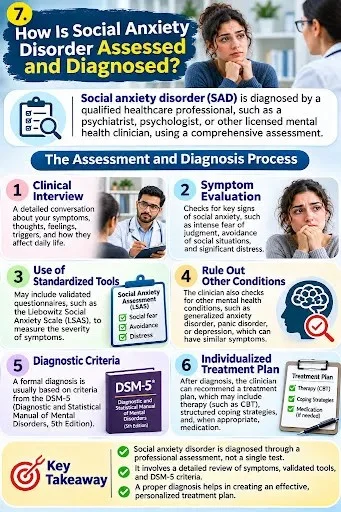
This infographic explains the assessment and diagnosis process for social anxiety disorder. It covers clinical interviews, symptom evaluation, standardized assessment tools such as the Liebowitz Social Anxiety Scale, consideration of other mental health conditions, recognized diagnostic criteria, and individualized treatment planning by qualified healthcare professionals.
Social anxiety disorder is diagnosed through a professional mental-health assessment that considers a person’s fear of social evaluation, avoidance patterns, duration of symptoms and impact on everyday functioning. A qualified healthcare professional may use clinical interviews, established diagnostic criteria and validated assessment questionnaires to understand the person’s experiences. No single symptom, online questionnaire or screening score is sufficient to establish a diagnosis.
WHAT HAPPENS DURING A PROFESSIONAL ASSESSMENT?
An assessment usually begins with a conversation about the situations that cause distress and how these experiences affect everyday life.
A healthcare professional may ask about the person’s social experiences, when the difficulties began, how frequently they occur and whether they interfere with work, relationships or other important activities.
The discussion may explore:
- Situations that create fear or discomfort.
- Concerns about embarrassment, criticism or negative evaluation.
- Whether certain social situations are avoided.
- How long these difficulties have been present.
- The effect on personal, social and professional functioning.
- Previous mental-health concerns or treatment.
- Other circumstances that may contribute to the person’s experiences.
The purpose is not simply to count symptoms. It is to understand the wider pattern and determine whether the experiences are consistent with social anxiety disorder or may have another explanation.
WHAT DIAGNOSTIC CRITERIA DO PROFESSIONALS CONSIDER?
Mental-health professionals use recognised diagnostic frameworks, including the Diagnostic and Statistical Manual of Mental Disorders, Fifth Edition, Text Revision (DSM-5-TR), when assessing social anxiety disorder.
Important diagnostic considerations include:
Persistent fear of social evaluation: The person experiences significant fear in situations where they may be observed, scrutinised or negatively judged by others. .
Consistent anxiety in feared situations: The relevant social situations generally trigger fear or anxiety.
Avoidance or intense distress: The person may avoid these situations or endure them with considerable discomfort.
Disproportionate fear: The level of fear is excessive in relation to the actual social threat and the surrounding cultural context.
Duration: The fear, anxiety or avoidance generally persists for six months or longer.
Meaningful interference: The difficulties cause significant distress or affect important areas of life, such as relationships, work or other responsibilities.
Professionals also consider whether another mental-health condition, medical issue or substance-related factor better explains the experiences.
These criteria are clinical assessment requirements, not a checklist for readers to diagnose themselves.
CAN QUESTIONNAIRES HELP IDENTIFY SOCIAL ANXIETY?
Yes. Validated questionnaires can help healthcare professionals understand the nature and severity of social anxiety.
Two commonly used assessment measures include:
Social Phobia Inventory (SPIN): A questionnaire designed to assess different aspects of social anxiety, including fear, avoidance and physical discomfort.
Liebowitz Social Anxiety Scale (LSAS): An assessment measure that examines fear and avoidance across different social interaction and performance situations.
These tools can help organise information, support clinical assessment and monitor changes during treatment.
However, questionnaire results must be interpreted within the person’s wider circumstances. A high score does not independently establish a diagnosis, and a lower score does not necessarily mean that professional assessment is unnecessary.
WHY PROFESSIONALS MAY CONSIDER OTHER CONDITIONS
Several mental-health conditions and personal circumstances can involve experiences that resemble or overlap with social anxiety.
A qualified professional may therefore explore other possible explanations, including:
- Other anxiety disorders.
- Depression and related difficulties.
- Avoidant personality disorder.
- Autism and other neurodevelopmental conditions.
- Relevant medical conditions or medication effects.
- Substance-related concerns
This does not mean that someone experiencing social anxiety necessarily has another condition. The purpose is to understand the person’s individual circumstances rather than assume that every social difficulty has the same explanation.
Accurate assessment is particularly important when more than one concern may be influencing everyday functioning.
WHO CAN ASSESS SOCIAL ANXIETY DISORDER?
Depending on the healthcare system and the professional’s qualifications, assessment may be conducted by:
- A psychiatrist.
- A licensed psychologist or clinical psychologist.
- Another appropriately qualified mental-health professional.
- A primary care physician who can assess initial concerns and arrange specialist referral when appropriate.
In the United States, a primary care provider can be a useful starting point for someone who is unsure where to seek help.
The appropriate professional should have the qualifications and competence required to conduct a mental-health assessment.
WHAT IF ATTENDING AN APPOINTMENT FEELS DIFFICULT?
Seeking an assessment can itself feel uncomfortable for someone experiencing social anxiety.
Talking about personal difficulties with an unfamiliar professional, making appointments or explaining concerns may create additional apprehension.
A supportive healthcare provider should recognise these barriers and help make the process more manageable.
Depending on availability and clinical suitability, an initial telephone or online conversation may be possible. Preparing a few notes about concerns and everyday difficulties can also help someone communicate more comfortably during an appointment.
It is perfectly reasonable to explain that discussing these experiences feels difficult.
An important reassurance: Seeking an assessment does not mean accepting a label or assuming that something is wrong with your personality. It is an opportunity to understand your experiences, explore possible explanations and discuss whether any form of professional support would be useful.
An accurate assessment should help people receive appropriate guidance rather than leave them feeling judged or defined by a diagnosis.
8. What Treatment Options May Help Adults With Social Anxiety?
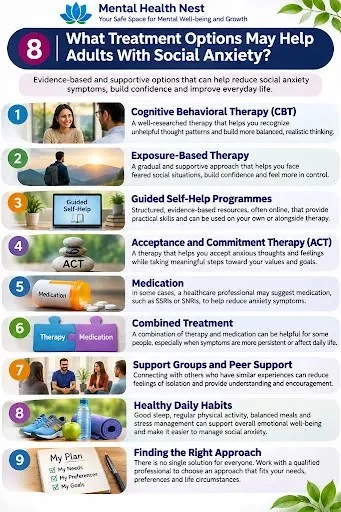
This infographic presents nine treatment and support options for adults with social anxiety: Cognitive Behavioral Therapy (CBT), exposure-based therapy, guided self-help programmes, Acceptance and Commitment Therapy (ACT), medication, combined treatment, support groups and peer support, healthy daily habits, and finding an approach that fits individual needs and preferences. These options may be considered according to individual circumstances and guidance from qualified healthcare professionals
Several evidence-based treatment options can help adults manage social anxiety and participate more comfortably in everyday life. Cognitive behavioral therapy (CBT), particularly approaches specifically designed for social anxiety disorder, is a well-established treatment. Other options may include guided self-help, exposure-based therapy, certain medications and additional psychological approaches. The most appropriate choice depends on individual needs, preferences, clinical circumstances and professional assessment.
COGNITIVE BEHAVIORAL THERAPY (CBT) FOR SOCIAL ANXIETY
Cognitive behavioral therapy (CBT) is one of the most extensively researched psychological treatments for social anxiety disorder. It helps people recognise unhelpful thinking patterns, reconsider negative assumptions and develop different ways of responding to challenging social situations.
Rather than focusing only on feeling less anxious, CBT addresses the thinking and behavioural patterns that may contribute to ongoing social difficulties.
For example, someone who believes that every conversation must be perfect may gradually learn to recognise that ordinary conversations naturally include pauses, mistakes and misunderstandings.
Specialised CBT for social anxiety may include:
- Identifying and examining negative assumptions about how others perceive them.
- Developing a more balanced understanding of social situations.
- Reducing excessive self-focused attention.
- Working with safety behaviours that maintain social fears.
- Practising alternative responses to challenging situations.
- Building greater confidence in everyday social participation.
The treatment is generally structured around the individual’s difficulties and goals.
The National Institute for Health and Care Excellence (NICE) recommends individual CBT specifically developed for social anxiety disorder as an initial treatment option for adults.
EXPOSURE-BASED THERAPY: GRADUALLY FACING FEARED SITUATIONS
Exposure-based therapy is an important component of many CBT approaches for social anxiety.
It involves gradually approaching situations that a person fears or avoids, within a structured and supportive treatment process.
The purpose is not to force someone into overwhelming situations. Instead, exposure work provides opportunities to examine feared predictions, develop new experiences and learn that uncertainty or discomfort does not always lead to the negative outcomes anticipated.
For example, someone who finds workplace discussions difficult might work with a therapist to identify manageable goals related to participating in conversations.
The pace and nature of this work should be appropriate to the individual’s circumstances and treatment plan.
With professional guidance, exposure-based approaches may help people become less dependent on avoidance and more comfortable participating in meaningful activities.
GUIDED SELF-HELP AND CBT-BASED PROGRAMMES
Some adults may prefer to begin with structured self-help rather than attending individual therapy immediately.
CBT-based self-help programmes can provide educational material, exercises and opportunities to understand social anxiety more clearly.
Guided self-help adds support from a trained professional who can help someone work through the material and review progress.
Depending on availability and individual suitability, these programmes may involve:
- Structured CBT workbooks.
- Therapist-supported online programmes.
- Guided digital mental-health interventions.
- Scheduled professional check-ins.
Self-help resources can be useful, particularly when supported by appropriate professional guidance. However, they should not automatically be treated as equivalent to individual therapy in every situation.
ACCEPTANCE AND COMMITMENT THERAPY (ACT)
Acceptance and Commitment Therapy (ACT) is another psychological approach that may be considered for social anxiety.
ACT focuses on changing how people respond to uncomfortable thoughts and feelings rather than making the complete elimination of anxiety the primary goal.
It encourages people to recognise difficult internal experiences without allowing those experiences to determine every decision.
For example, someone may learn to acknowledge nervousness before attending a social gathering while still choosing to participate because maintaining friendships is important to them.
ACT may involve:
- Developing greater awareness of thoughts and emotions.
- Learning to respond to uncomfortable feelings without excessive self-judgment.
- Identifying personal values.
- Making choices that support meaningful relationships and activities.
- Developing psychological flexibility.
Research into ACT for social anxiety is growing. However, the evidence base is not as established as that for specialised CBT.
MEDICATION FOR SOCIAL ANXIETY DISORDER
Medication may be considered when social anxiety causes significant difficulties, when someone prefers a medication-based approach after discussing available options, or when a healthcare professional believes it may be beneficial as part of an individual treatment plan.
Certain antidepressant medications, particularly selective serotonin reuptake inhibitors (SSRIs) and serotonin-norepinephrine reuptake inhibitors (SNRIs), are used in treating social anxiety disorder.
Although these medications are commonly associated with depression treatment, some are also prescribed for anxiety disorders.
A qualified healthcare professional considers several factors before recommending medication, including:
- The person’s symptoms and individual circumstances.
- Other health conditions and medications.
- Potential benefits and side effects.
- Personal preferences.
- Whether psychotherapy may also be appropriate.
Medication effects may take several weeks to become noticeable. Possible side effects vary depending on the medication and individual.
People should discuss medication decisions, including starting, changing or stopping treatment, with their prescribing healthcare professional.
Medication is not automatically necessary for everyone experiencing social anxiety. The decision should be based on an informed discussion rather than pressure or assumptions.
CAN THERAPY AND MEDICATION BE USED TOGETHER?
Yes. In some circumstances, a combination of psychotherapy and medication may be considered.
For example, an adult who experiences substantial social anxiety may benefit from specialised CBT while also receiving medication prescribed by a qualified healthcare professional.
The combination may be considered when symptoms remain difficult to manage with one approach alone or when clinical circumstances support using both.
However, combined treatment is not necessary for everyone. Some people may benefit from psychotherapy alone, while others may require a different treatment approach.
Treatment decisions should be reviewed periodically so that the approach remains appropriate to the person’s needs and progress.
SUPPORT GROUPS AND PEER SUPPORT
Support groups can offer opportunities to connect with people who have experienced similar social difficulties.
Sharing experiences with others may help reduce feelings of isolation and provide a sense of understanding.
Depending on the group, participants may discuss:
- Difficulties with everyday social interactions.
- Experiences of seeking professional support.
- Challenges involving friendships and relationships.
- Ways of navigating social situations.
- Personal experiences of psychological treatment.
Support groups may complement professional care, but they should not replace clinical assessment or evidence-based treatment when these are needed.
It is also important to choose supportive environments that respect privacy, personal boundaries and individual differences.
HEALTHY DAILY HABITS AS SUPPORTIVE MEASURES
Everyday habits can contribute to general emotional wellbeing and may support someone who is receiving treatment for social anxiety.
Helpful areas to consider include:
- Maintaining a reasonably consistent sleep routine.
- Participating in enjoyable physical activities.
- Maintaining meaningful connections with trusted people.
- Allowing time for hobbies and personal interests.
- Creating a manageable balance between responsibilities and rest.
- Seeking appropriate support when everyday difficulties become overwhelming.
These habits can support overall wellbeing, but they should not be presented as standalone treatments for social anxiety disorder.
FINDING AN APPROACH THAT FITS INDIVIDUAL NEEDS
There is no single treatment experience that is identical for every adult.
Some people may prefer individual therapy, while others may find guided online programmes or a combination of approaches more suitable.
Access to qualified professionals, financial considerations, personal preferences and other health circumstances can also influence treatment decisions.
A 2025 systematic review and Bayesian network meta-analysis examined 92 studies, including 90 randomized controlled trials, involving different psychotherapies for adults with social anxiety disorder. The findings generally supported CBT, particularly specialised CBT approaches, while also identifying potential benefits from other psychological interventions. Although these findings contribute to the evidence base for treatment, differences between therapies and individual circumstances mean that no single approach should be assumed to work equally well for everyone.
An important reminder: Seeking treatment does not mean that you must change your personality, become extremely outgoing or meet someone else’s expectations of social confidence. The purpose of appropriate support is to help you experience greater freedom, develop meaningful connections and participate in activities that matter to you. Progress can take time, and the right approach deserves to respect your individual circumstances.
9. Practical Ways to Navigate Everyday Situations With Social Anxiety
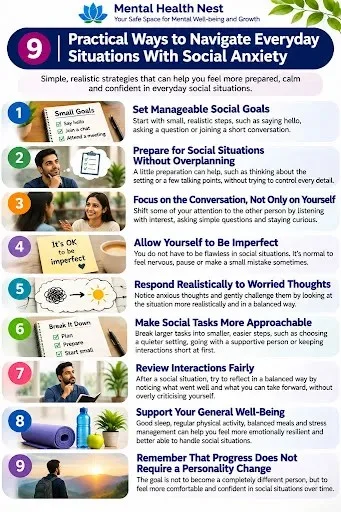
This infographic presents nine practical strategies for navigating everyday situations with social anxiety: setting manageable social goals, preparing without overplanning, focusing on conversations, allowing yourself to be imperfect, responding realistically to worried thoughts, making social tasks more approachable, reviewing interactions fairly, supporting general well-being, and recognizing that progress does not require a personality change.
Social anxiety can make ordinary interactions feel demanding, particularly when you are concerned about being judged, making a mistake, or drawing attention to yourself. Practical strategies may help you approach these situations with greater preparation and flexibility. The aim is not to eliminate every anxious feeling or become highly outgoing, but to make room for meaningful activities and connections even when some nervousness is present.
START WITH MANAGEABLE SOCIAL GOALS
When several social situations feel difficult, trying to change everything at once can become overwhelming. Instead, identify one manageable situation that matters to you and decide what you would like to do.
For example, you might:
- Say hello to a colleague rather than avoiding the interaction.
- Ask one question during a meeting.
- Make a brief phone call you have been putting off.
- Stay for part of a social gathering instead of deciding in advance that you cannot attend.
- Join a conversation with someone you already feel relatively comfortable around.
Choose steps that feel challenging but manageable. You do not need to force yourself into situations that feel overwhelming. Progress can involve gradually becoming more comfortable with activities that are important to you.
PREPARE FOR SOCIAL SITUATIONS WITHOUT OVERPLANNING
A little preparation can make an unfamiliar interaction feel more manageable. If you are attending a work meeting, meeting someone new, or going to a social event, think about one or two simple things you might say or ask.
You could prepare:
- A brief introduction about yourself.
- A question related to the event or shared activity.
- A simple way to join an ongoing conversation.
- A polite response if you need a moment to think.
Preparation is useful when it gives you a starting point. However, trying to plan every sentence or predict every possible response may increase pressure. Conversations do not have to follow a perfect script. It is normal to pause, lose your train of thought, or have moments of silence.
FOCUS ON THE CONVERSATION, NOT ONLY ON YOURSELF
When social anxiety is present, attention can become absorbed by questions such as, “Do I sound nervous?” or “What are they thinking about me?” This can make it harder to follow what another person is saying.
Try gently bringing your attention back to the conversation. Listen to the other person’s words, notice the subject being discussed, and ask a relevant follow-up question when appropriate.
For example, if a colleague talks about a recent project, you might ask what they found most interesting about it. You do not need to impress everyone or keep a conversation going continuously. Showing ordinary interest and listening can be enough.
ALLOW YOURSELF TO BE IMPERFECT
A common source of pressure is the expectation that every interaction must go smoothly. You may worry about choosing the wrong words, pausing too long, blushing, or appearing nervous.
Try to make room for the possibility that an interaction can be worthwhile even when it is not perfect. People sometimes stumble over words, misunderstand a question, or feel unsure about what to say. These ordinary moments do not automatically mean that others have formed a negative opinion.
Instead of judging the entire interaction by one uncomfortable moment, consider whether you communicated what you needed to communicate.
USE A REALISTIC RESPONSE TO WORRIED THOUGHTS
Before or after a social interaction, you may find yourself predicting that something embarrassing will happen or reviewing the conversation for mistakes.
Rather than arguing with every anxious thought, pause and consider whether it is a prediction or an established fact.
For example:
- Anxious prediction: “Everyone will notice that I am nervous.”
- More balanced response: “I cannot know what everyone is thinking. I can focus on the conversation rather than guessing.”
Or:
- Anxious prediction: “I made one awkward comment, so the whole conversation went badly.”
- More balanced response: “One uncomfortable moment does not tell me everything about how the interaction went.”
The purpose is not to replace negative thinking with unrealistic positivity. It is to consider the situation more fairly and avoid treating every anxious prediction as a certainty.
MAKE EVERYDAY SOCIAL TASKS MORE APPROACHABLE
Some situations can feel difficult simply because they involve uncertainty or an unfamiliar interaction. Breaking a task into smaller parts may make it easier to approach.
For example:
- Before attending an appointment, write down the main questions you want to ask.
- If you need help in a shop, decide on one clear question.
- Before a work discussion, identify the main point you want to communicate.
- If you are attending a gathering, consider arriving with someone you trust or identifying a person you would feel comfortable speaking with.
These are practical supports, not requirements. Use the approaches that help you participate without making you feel that every interaction must be carefully controlled.
NOTICE WHAT HAPPENED AFTER AN INTERACTION
After a social situation, it can be tempting to replay the conversation and focus only on what you think went wrong. If this happens, try to review the experience in a more balanced way.
You might ask yourself:
- What actually happened, rather than what I feared would happen?
- Was there anything that went reasonably well?
- Did I manage to do something that I had been avoiding?
- Is there anything useful I can take from the experience without criticising myself?
You do not need to analyse every conversation. The aim is simply to avoid allowing one uncomfortable moment to define the whole experience.
LOOK AFTER YOUR GENERAL WELL-BEING
Sleep, regular physical activity, balanced meals, and supportive relationships contribute to general well-being. Relaxation practices may also help some people manage everyday stress
These habits can support emotional health, but they are not a substitute for appropriate treatment when social anxiety is persistent or significantly affects daily life. If practical strategies alone are not enough, a qualified mental health professional can help you explore suitable support.
REMEMBER THAT PROGRESS DOES NOT REQUIRE A PERSONALITY CHANGE
Managing social anxiety does not mean becoming the most talkative person in a group, enjoying every gathering, or always feeling confident. You can remain quiet, thoughtful, or reserved while building relationships and taking part in activities that matter to you.
Some days may feel easier than others. An uncomfortable interaction does not erase the effort you have made, and progress does not need to look the same for everyone.
If social anxiety continues to restrict your work, relationships, or everyday choices, consider discussing it with a qualified healthcare or mental health professional. You deserve support that respects your circumstances and personal goals.
10. How to Support Someone Experiencing Social Anxiety
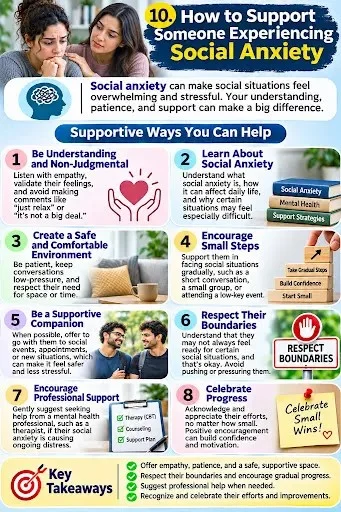
This infographic explains eight supportive ways to help someone experiencing social anxiety. It encourages understanding, nonjudgmental listening, learning about social anxiety, creating a comfortable environment, encouraging gradual progress, offering companionship, respecting personal boundaries, and suggesting professional support when needed.
Supporting someone with social anxiety begins with understanding that situations that appear ordinary to others may feel stressful or overwhelming to that person. A conversation, workplace meeting, family gathering, or unfamiliar social event may involve considerable worry about being judged or embarrassed. Patient listening, respectful communication, and practical support can help the person feel less alone without making them feel pressured to behave differently.
LEARN ABOUT SOCIAL ANXIETY BEFORE MAKING ASSUMPTIONS
Social anxiety is more than simply being quiet or preferring to spend time alone. A person may want friendships, relationships, and social connections while finding certain interactions difficult because of fear of negative judgment.
Learning about the condition can help you understand why someone may decline invitations, hesitate to speak in a group, or feel uncomfortable when attention is directed towards them.
Try not to assume that the person is unfriendly, uninterested, arrogant, or unwilling to make an effort. Their experience may be quite different from what you can see.
LISTEN WITHOUT JUDGING OR MINIMISING THEIR FEELINGS
If someone chooses to talk about their social anxiety, give them time to explain what they are experiencing. You do not need to provide an immediate solution or persuade them that their worries are unnecessary.
You might say:
- “Thank you for telling me. I am here to listen.”
- “What situations feel most difficult for you?”
- “Is there anything I can do that would make this easier?”
- “You do not have to explain everything at once.”
Avoid comments such as “Just be confident,” “Stop worrying about what people think,” or “There is nothing to be afraid of.” Although these statements may be intended as encouragement, they can make someone feel misunderstood or criticised.
Listening with patience can communicate that their feelings matter, even when you do not fully understand them.
INVITE THEM WITHOUT PRESSURING THEM
Including someone in ordinary social activities can help them feel remembered and valued. Continue offering invitations to appropriate gatherings, meals, walks, or shared activities, while respecting their decision if they are not ready to participate.
For example, instead of saying, “You have to come to this party,” you could say, “We are meeting for dinner on Saturday. You are welcome to join us if you feel comfortable.”
You can also offer alternatives, such as meeting in a quieter place, spending time with one or two people, or choosing an activity that does not require constant conversation.
The important distinction is between making someone feel included and making them feel obligated.
AVOID FORCING OR EMBARRASSING THEM IN SOCIAL SITUATIONS
Putting someone unexpectedly in the spotlight can increase their discomfort. Avoid insisting that they give a speech, introduce themselves to a large group, answer personal questions, or participate in an activity simply to help them overcome their fear.
Do not joke about their anxiety, draw attention to their nervousness, or disclose their personal experiences to others without permission.
If they want to try a challenging social activity, ask how you can support them. Let them have a say in what feels manageable and respect their boundaries.
Professional treatment may involve structured work with feared situations, but this should not be confused with friends or family members forcing someone into uncomfortable situations.
OFFER PRACTICAL SUPPORT WHEN THEY ASK FOR IT
Small acts of consideration can make everyday interactions more manageable. The most useful support depends on the person’s preferences, so ask rather than assume.
For example, you could:
- Accompany them to an unfamiliar event if they would find that helpful.
- Help them prepare for an important appointment or meeting.
- Choose a quieter place for a conversation.
- Give them advance information about a social gathering, such as who will attend and what to expect.
- Offer to accompany them to a healthcare appointment if they want support.
Practical assistance should help the person make their own choices, not make decisions on their behalf.
ENCOURAGE PROFESSIONAL SUPPORT WITHOUT PRESSURE
If social anxiety is affecting someone’s relationships, work, education, or everyday activities, you can gently encourage them to speak with a qualified healthcare or mental health professional.
You might say, “You have been dealing with this for a while. Would you consider talking with someone who understands social anxiety? I can help you look at the options if you would like.”
Some people may feel nervous about making an appointment or explaining their concerns. If they want your help, you could assist with finding information, writing down questions, or accompanying them to the appointment.
Respect their right to make decisions about their care. Avoid presenting professional help as a punishment or suggesting that they are failing if they are not ready to seek it.
RECOGNISE THEIR EFFORT WITHOUT CREATING PRESSURE
Progress may not always be obvious to other people. Someone might attend a gathering for a short time, contribute to a conversation, or complete an interaction they had previously avoided.
A simple, sincere acknowledgement can be encouraging if it is welcome. For example, you might say, “I appreciated having you there today.”
Avoid turning every social interaction into a test of progress or repeatedly asking whether they felt anxious. The person should not feel that they are being monitored or evaluated.
RESPECT THEIR INDEPENDENCE AND MAINTAIN HEALTHY BOUNDARIES
Supporting someone does not mean taking responsibility for every social decision they make or organising your entire life around their anxiety. Healthy relationships allow room for both people’s needs, preferences, and boundaries.
You can be understanding while maintaining your own friendships, activities, and responsibilities. If you feel uncertain or emotionally stretched, it may help to discuss your concerns with someone you trust while respecting the person’s privacy.
Support works best when it is compassionate and sustainable for everyone involved.
REMEMBER THAT YOUR PRESENCE CAN MATTER
You may not always know the right words to say, and you cannot remove another person’s anxiety through reassurance alone. However, treating them with respect, continuing to include them, and listening without judgment can help them feel accepted.
Social anxiety does not define someone’s personality, abilities, or value. A person can experience anxiety and still have meaningful friendships, contribute at work, build relationships, and participate in activities that matter to them.
Sometimes, the most helpful message is simple: they do not have to pretend to feel confident or explain themselves perfectly to be treated with kindness.
11. When Should Adults Seek Professional Help for Social Anxiety?
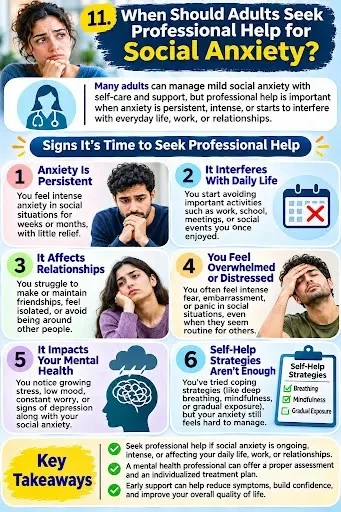
This infographic highlights six signs that adults may benefit from professional support for social anxiety. These include persistent anxiety, interference with daily activities, difficulties maintaining relationships, overwhelming emotional distress, effects on mental health, and limited improvement with self-help strategies. It also emphasizes the value of professional assessment, individualized support, and early intervention.
Social anxiety can become difficult to manage when the fear of being judged or embarrassed starts influencing important decisions and everyday activities. Someone may gradually avoid work responsibilities, social invitations, relationships, or situations that matter to them. When this pattern causes ongoing distress or limits daily functioning, speaking with a qualified healthcare or mental health professional may be helpful.
WHEN SOCIAL ANXIETY STARTS INTERFERING WITH EVERYDAY LIFE
One important reason to seek professional support is when anxiety repeatedly prevents you from doing things that are important or necessary.
For example:
- Avoiding workplace meetings or opportunities because of fear of speaking.
- Turning down social invitations even when you would like to attend.
- Finding it difficult to develop or maintain friendships and relationships.
- Avoiding appointments, phone calls, or everyday responsibilities because they involve interacting with others.
- Making important personal or professional decisions mainly to escape social situations.
You do not have to wait until these difficulties become severe. If anxiety is consistently restricting your choices or affecting your quality of life, discussing it with a professional is reasonable.
WHEN FEAR AND WORRY BECOME PERSISTENT OR DISTRESSING
Occasional nervousness in unfamiliar or demanding social situations is a normal human experience. However, persistent fear that continues to cause considerable distress deserves attention, particularly when it is difficult to manage independently.
You may find yourself spending considerable time worrying about upcoming interactions, avoiding situations you would otherwise value, or feeling that social anxiety is controlling important parts of your life.
There is no need to wait for a particular milestone or for every possible sign to appear before asking for help.
WHEN SOCIAL ANXIETY AFFECTS RELATIONSHIPS AND PERSONAL WELL-BEING
Social anxiety can sometimes create distance between people. Someone may want closer friendships or a more active social life but find it difficult to communicate, attend gatherings, or express their needs.
If this is contributing to loneliness, relationship difficulties, reduced confidence, or ongoing emotional distress, professional support may help you understand what is happening and explore appropriate options.
It is also worth discussing additional emotional difficulties with a healthcare professional rather than assuming that every concern has the same cause.
WHEN SELF-HELP STRATEGIES ARE NOT ENOUGH
Practical approaches such as preparing for conversations, setting manageable goals, and using balanced thinking may support everyday coping. However, these strategies do not work equally well for everyone, and they may not be sufficient when social anxiety is significantly affecting daily life.
If you have tried making changes but continue to experience substantial distress or avoidance, consider seeking a professional assessment. A qualified professional can help clarify your difficulties and discuss appropriate treatment or support.
Seeking help is not a sign that you have failed to manage the situation yourself. It is a way of accessing guidance suited to your needs.
WHO CAN YOU SPEAK TO ABOUT SOCIAL ANXIETY?
In the United States, a primary care provider can be a useful starting point. Depending on your circumstances, they may discuss your concerns, consider whether other health factors need attention, and refer you to an appropriate mental health professional.
Professionals who may be involved include:
- Psychologists: May provide psychological assessment and therapies such as cognitive behavioural therapy.
- Psychiatrists: Medical doctors who can assess mental health conditions and discuss treatment options, including medication when appropriate.
- Licensed clinical social workers and other qualified therapists: May provide assessment, counselling, or psychotherapy within their professional scope and state licensing requirements.
When choosing a professional, check their qualifications, licence, experience, and familiarity with social anxiety.
WHAT IF MAKING AN APPOINTMENT FEELS DIFFICULT?
For someone experiencing social anxiety, asking for professional help can itself feel intimidating. Making a phone call, explaining personal concerns, or attending an unfamiliar office may create additional worry.
A few practical arrangements may make the first step more manageable:
- Write down your main concerns before contacting a provider.
- Ask whether an initial appointment can take place by phone or through a secure telehealth service.
- Check whether you can complete registration forms before the appointment.
- Ask a trusted person to accompany you or help arrange the appointment, if you would find that useful.
- Begin by explaining that social situations and appointments make you anxious.
You do not need to describe everything perfectly. A simple statement such as, “I have been avoiding social situations because I am afraid of being judged, and it is affecting my daily life,” can be a useful starting point.
SEEKING HELP DOES NOT MEAN GIVING UP YOUR PERSONALITY
Professional support is not about turning a quiet or reserved person into someone who enjoys every social gathering. It is about addressing distress and helping people participate more freely in the relationships, responsibilities, and activities that matter to them.
You can prefer smaller gatherings, enjoy time alone, and still benefit from support if fear is restricting your choices.
You deserve the opportunity to make decisions based on what matters to you, rather than feeling that anxiety must make those decisions for you.
If social anxiety is affecting your everyday life, consider speaking with a qualified professional. You do not have to wait until things become unmanageable before taking that step.
12. Frequently Asked Questions
CONCLUSION
Social anxiety in adults is more than occasional nervousness or a preference for quieter surroundings. It can involve a persistent fear of being judged, embarrassed, or negatively evaluated, making conversations, relationships, workplace interactions, and everyday social situations difficult.
Understanding social anxiety is an important first step. Recognising how it differs from shyness and introversion, identifying its possible causes, and understanding how fear and avoidance can affect daily life can help people make sense of their experiences without judging themselves.
Social anxiety does not have to define a person’s identity or determine the relationships and opportunities available to them. Evidence-based treatments, including cognitive behavioural therapy, and appropriate professional support can help many people manage their difficulties. Practical everyday strategies and understanding from family, friends, and colleagues can also make a meaningful difference.
There is no requirement to become highly outgoing or comfortable in every social situation. The goal is to have greater freedom to participate in the activities, relationships, and experiences that matter to you.
If social anxiety is affecting your everyday life, consider speaking with a qualified healthcare or mental health professional. You deserve understanding, appropriate support, and the opportunity to move forward at a pace that respects your individual circumstances.
EXPLORE MORE ON MENTALHEALTHNEST.COM
Understanding mental health is an ongoing journey. At MentalHealthNest.com, we aim to make reliable mental health information easier to understand and apply in everyday life.
Explore our educational guides covering anxiety, emotional well-being, stress, sleep, mental health conditions, and practical approaches to supporting emotional health.
Whether you are learning for yourself, supporting someone you care about, or simply developing a better understanding of mental health, we hope you find information that is useful, respectful, and relevant to your needs.
Continue exploring MentalHealthNest.com for more mental health education and resources.
EXPLORE OUR ANXIETY GUIDES
Explore more MentalHealthNest guides to understand different aspects of anxiety, recognise common challenges, and learn about available support options.
1. Anxiety Disorders: Understanding Symptoms, Types, and Treatment
Learn about different anxiety disorders, their symptoms, how they may affect everyday life, and the assessment and treatment options available.
2. Overthinking and Anxiety: Why Your Mind Won’t Slow Down
Explore how repetitive worries and difficulty disengaging from thoughts may be connected with anxiety, along with practical approaches to managing persistent worry.
3. Anxiety vs. Stress: What’s the Difference and How Can You Tell?
Understand how anxiety and everyday stress differ, where they overlap, and when ongoing difficulties may deserve additional attention.
4. Anxiety and Sleep: Why Anxiety Can Keep You Awake
Discover how worry and heightened alertness may affect sleep and explore approaches that can support healthier sleep habits.
5. Panic Attacks vs. Anxiety Attacks: What Is the Difference.
Understand the distinction between panic attacks and the informal term “anxiety attack,” including how symptoms may develop.
6. Health Anxiety: When Worry About Your Health Becomes Overwhelming
Learn about persistent health-related worry, how it can affect everyday life, and when professional support may be beneficial.
7. Social Anxiety in Adults: Symptoms, Causes, and What May Help
You are currently reading this guide. Explore how fear of judgment or embarrassment can affect social situations and learn about possible support options.
8. Anxiety at Work: How Workplace Stress Can Affect Mental Health
Understand how workplace pressures may contribute to anxiety and affect concentration, performance, and well-being.
9. Anxiety and Relationships: Why Anxiety Can Affect Connection and Communication
Explore how anxiety may influence communication, trust, and connection, and consider constructive ways to approach relationship challenges.
10. How to Calm an Anxious Mind: Practical Strategies for Managing Anxiety
Discover practical approaches to responding to anxious thoughts, navigating everyday stressors, and supporting emotional well-being.
11. When Does Anxiety Become a Problem?
Learn when anxiety may be more than a temporary response to stress and when professional assessment may be worth considering.
12. How to Help Someone With Anxiety: What to Say, What to Avoid, and How to Offer Support
A NOTE TO RETURNING READERS
Thank you for continuing to explore MentalHealthNest.com. If you have read our earlier articles on anxiety, overthinking, stress, sleep, and emotional well-being, we hope this guide has added another useful perspective to your understanding.
Mental health is not a single subject with one simple explanation. Each experience can have different causes, challenges, and support needs. By exploring these topics together, we hope to help readers build a broader understanding of emotional health and make more informed decisions about seeking support when needed.
We appreciate your time, trust, and continued interest in MentalHealthNest. Your journey of learning matters, and we hope you will continue finding useful information here.
TRUSTED MENTAL HEALTH RESOURCES
The following organizations provide reliable mental health information, educational materials, and guidance on finding support. These resources can help readers learn more about social anxiety and understand where to turn when additional assistance is needed.
1. National Institute of Mental Health (NIMH)
A U.S. government research institute providing evidence-based information about social anxiety disorder, symptoms, causes, treatment options, and mental health research.
Website: https://www.nimh.nih.gov/
Social Anxiety Disorder : https://www.nimh.nih.gov/health/publications/social-anxiety-disorder-more-than-just-shyness
2. Substance Abuse and Mental Health Services Administration (SAMHSA)
A U.S. government agency offering information about mental health services, treatment options, and ways to locate support in the United States.
Website: https://www.samhsa.gov/
Find Mental Health Treatment: https://www.findtreatment.gov/
3. National Institute for Health and Care Excellence (NICE)
An independent organization providing evidence-based guidance on health and care. Its recommendations include assessment and treatment guidance for social anxiety disorder.
Website: https://www.nice.org.uk/
Social Anxiety Disorder Guidance: https://www.nice.org.uk/guidance/cg159
4. U.S. Department of Health and Human Services — Mental Health Resources
Provides information about mental health support, treatment resources, and services available to people in the United States.
Website: https://www.hhs.gov/
Mental Health Resources: https://www.hhs.gov/programs/prevention-and-wellness/mental-health-substance-use-disorder/index.html
A note for readers: These organizations provide educational information and help readers explore support options. Online resources cannot replace an individual assessment or advice from a qualified healthcare professional.
REFERENCES
- National Institute of Mental Health (NIMH). Social Anxiety Disorder: What You Need to Know.National Institutes of Health, U.S. Department of Health and Human Services.
https://www.nimh.nih.gov/health/publications/social-anxiety-disorder-more-than-just-shyness - National Institute for Health and Care Excellence (NICE). Social Anxiety Disorder: Recognition, Assessment and Treatment (CG159).
https://www.nice.org.uk/guidance/cg159 - National Institute for Health and Care Excellence (NICE). Social Anxiety Disorder: Recommendations.
https://www.nice.org.uk/guidance/cg159/chapter/recommendations - National Health Service (NHS). Social Anxiety (Social Phobia).
https://www.nhs.uk/mental-health/conditions/social-anxiety/ - Mayo Clinic. Social Anxiety Disorder: Symptoms and Causes.
https://www.mayoclinic.org/diseases-conditions/social-anxiety-disorder/symptoms-causes/syc-20353561 - Mayo Clinic. Social Anxiety Disorder: Diagnosis and Treatment.
https://www.mayoclinic.org/diseases-conditions/social-anxiety-disorder/diagnosis-treatment/drc-20353567 - Psychotherapies for Social Anxiety Disorder in Adults: A Systematic Review and Bayesian Network Meta-Analysis. PubMed, 2025.
https://pubmed.ncbi.nlm.nih.gov/40023260/ - The Efficacy of Psychotherapy for Social Anxiety Disorder: A Systematic Review and Meta-Analysis. PubMed, 2024.
https://pubmed.ncbi.nlm.nih.gov/38815481/
MEDICAL DISCLAIMER
The information provided in this article is intended for general educational and mental health awareness purposes only. It is not a substitute for professional medical advice, psychological assessment, diagnosis, or treatment.
Social anxiety can affect individuals differently. The information presented here cannot determine whether someone has social anxiety disorder or another mental health condition. Only a qualified healthcare or mental health professional can conduct an appropriate assessment and recommend suitable care.
Do not delay seeking professional advice or disregard guidance from a qualified healthcare provider because of information you have read on MentalHealthNest.com.
If you have concerns about your mental health or someone else’s well-being, consider speaking with an appropriately qualified professional.
MentalHealthNest.com does not provide medical diagnosis, clinical treatment, or emergency mental health services.
• Mental Health Directory
• Psychologist Registration
• Psychiatrist Registration
Every article is designed to help you make informed decisions, strengthen your mental wellbeing, and connect with trusted professional support when needed.
ABOUT MENTALHEALTHNEST: EDITORIAL POLICY AND CONTENT STANDARDS
MentalHealthNest.com is committed to providing accessible, responsible, and evidence-informed mental health education. Our purpose is to help readers better understand mental health, emotional well-being, mental health conditions, and available support options.
Our Editorial Commitment
We follow these principles when creating and publishing content:
1. Evidence-Informed Information
We prioritise reliable information from recognised health organisations, established medical institutions, professional organisations, and relevant scientific research.
2. Accuracy and Reliability
We make every reasonable effort to ensure that our articles present accurate, relevant, and appropriately supported information. We avoid fabricated statistics, misleading claims, unsupported treatment promises, and sensational statements.
3. Clear and Understandable Language
We aim to explain mental health topics in accessible language so readers can understand important information without unnecessary medical or scientific jargon.
4. Transparency and Responsibility
We distinguish general educational information from professional medical advice. We do not present our content as a substitute for individual assessment, diagnosis, or treatment by qualified healthcare professionals.
5. Respect for Every Reader
We believe mental health experiences deserve understanding, dignity, and compassion. Our content avoids stigma, discrimination, blame, and language that may shame or label individuals.
6. Content Review and Updates
We aim to review and update published information when relevant evidence, clinical guidance, or important developments change. Corrections and improvements are part of our commitment to maintaining useful and responsible content.
7. Responsible Use of Information
Our articles are intended to support awareness and informed understanding. Readers should consult qualified professionals for personal medical concerns, diagnosis, and treatment decisions.
Our Commitment to Readers
MentalHealthNest.com is more than a collection of individual articles. We are building an interconnected mental health education ecosystem where readers can explore related topics, understand different perspectives, and find reliable educational resources in one place.
We value accuracy, transparency, originality, and reader trust. Our goal is to make meaningful mental health information accessible while respecting the importance of professional healthcare and individual experiences.
MentalHealthNest.com — Promoting mental health awareness through responsible education, understanding, and compassion.
ABOUT THE AUTHOR
Sujit Shetty — Founder of MentalHealthNest.com | Mental Health Advocate and Blogger
Sujit Shetty is the founder of MentalHealthNest.com, an educational platform dedicated to mental health awareness, emotional well-being, and accessible mental health information.
As a mental health advocate and blogger, he is committed to making mental health topics easier to understand through reader-focused articles, evidence-informed resources, and practical educational guidance.
His work focuses on helping readers explore mental health conditions, understand emotional challenges, reduce stigma, and become more informed about available support options.
Sujit is not a licensed mental health professional or healthcare provider. MentalHealthNest articles are developed for general educational purposes and are informed by recognised health organisations, reliable research, and established mental health resources.
Through MentalHealthNest.com, he aims to build a trusted mental health education platform that encourages understanding, informed awareness, and compassion.
Learn more: https://mentalhealthnest.com/
Respect for therapists, psychologists, psychiatrists, and other healthcare professionals
MentalHealthNest.com aims to become one of the web’s most trusted educational resources for mental health while connecting readers with qualified mental health professionals through its growing therapist directory.